
Our Chat 'N Do group next meet on Wednesday at Largs - You are very welcome to join us
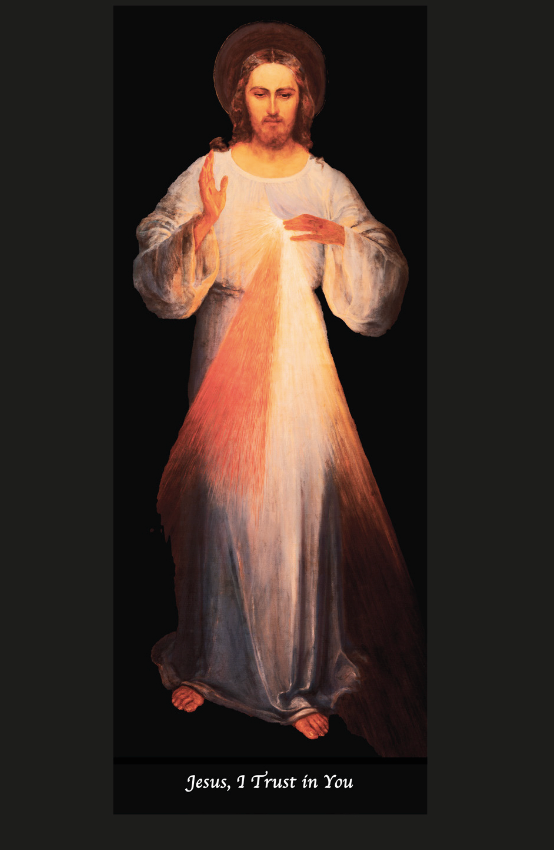
Join us for Divine Mercy prayers and chaplet - Fridays 2:30-3:30pm - St Mary's, Largs
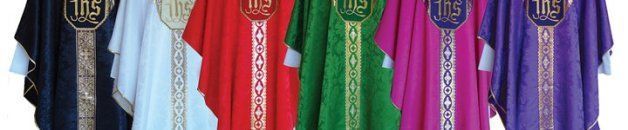
The main colour scheme of the website is blue with the menu yellow, the Blue is representative of Our Lady and the way we perceive her. The blue cloak that Mary wears represents the Virgin’s purity, and her royal status. The red garment that Our Lady is often seen wearing signifies traits connected with motherhood, including love, passion, and devotion. The yellow on the website represents a yellow rose. Liturgical colours throughout the year and what they represent White – Stands for innocence, purity, joy, triumph, and glory. We see this colour during Christmas, Easter, All Saints’ Day, Feasts of the Apostles, Feasts of the Lord (other than of His passion), Feasts of Mary, the angels, and saints who were not martyrs; and nuptials. We also see it during Masses for the Dead [Requiem Masses], which happens when the deceased is a baptised child who died before the age of reason. White is the colour of the pope’s non-liturgical dress. We also like to believe that the phrase “White Christmas” stood for this colour – rather than snow, of course. Red – This colour signifies passion, blood, fire, God’s love, and Jesus’ martyrdom. It is usually worn on the Feast of the Lord’s Passion, Blood, and Cross; Palm Sunday, Pentecost and when the Sacrament of Confirmation is performed Green – The colour of the Holy Spirit, life, eternal, and hope, this is usually worn by the priest on Sundays of Ordinary Time. Violet – You see this colour on Sundays of Advent and Lent; and whenever the priest performs the Sacraments of Reconciliation and of the Sick. Rose – A priest can wear this colour optionally on Gaudete Sunday [3rd Sunday of Advent] and Laetare Sunday [4th Sunday of Lent]. (Mgr. Peter usually likes to) Black – This is sometimes worn on All Souls’ Day and Masses for the Dead. Gold – This is interchangeable with the liturgical colors green, red, or white only. © 2026 RC Largs and Millport. All Rights Rese
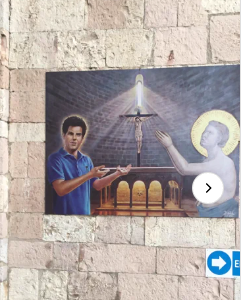
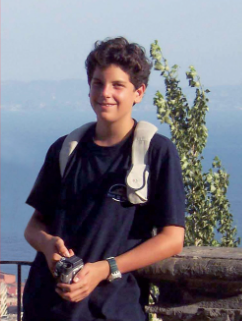
Suffering of Blessed Carlo Acutis Limits of talk: personal reflection on some aspects of CA’s suffering on basis of my limited knowledge and understanding of him. His parents’ lack of faith: a “deprivation” in earliest years. God worked it to his advantage through the believing nannies that came his way. Perhaps the fact of no siblings? Again God used it. School life: suffering of his empathy and compassion, of the mockery he received, of standing up for the bullied, the harassed girls, the Church’s teaching, his purity and devotion to Jesus (my life program is always to be near Jesus). Socially: he felt deeply for the suffering of the poor and the immigrants. Spiritually: self-denial (non io ma Dio) in self-discipline and in consistency and perseverance in living out his own originality (non fotocopia). CA clearly underwent a gradual process of realising how different he was from others, not so much in externals as internally. This will have led to a certain inner solitude, humanly speaking. He will have felt misunderstood by others but himself have understood this misunderstanding of him: he will have seen that because they did not have the kind of relationship with Jesus which he had, they would not be able to understand why he acted as he did. When Christ draws someone closer to himself it always involves a process of detachment from others and from self – not a detachment from loving them, but from attaching to his love for them a greater importance than the love for Christ. This detachment is the way of the Cross: it leads to a turning upside down and inside out of the priorities we humans usually have. When Christ captures the heart, it means a total reassessment of our lives. In a way known only to Jesus and to Carlo, there must have occurred a critical point of no return. At some point, Carlo realised that he was no longer just to be like Christ for others here below, but to become Christ for others from heaven above. We can only really become Christ for others when we realise we are Christ’s alone. In some way, it reminds me of St. Paul who told the Philippians that he would rather be gone and be with Christ, but that he would probably remain alive in the flesh for their sakes. In another way, of course, it is also true that we can do more for others from heaven than we can do on this earth. How do we know that Carlo realised that a point had been reached in his life in Jesus that pointed to an early death? Carlo recorded a video message two or three months before he died in which he explicitly says “sono destinato a morire”: I am destined to die. He wasn’t talking about some date in many decades’ time, because he had already intimated to his mother that he would die young and the exact cause of his death. Christ’s taking of Carlo to himself interiorly translated exteriorly into Carlo’s passion, the physical suffering that would transform him into the crucified Jesus. I want to approach Carlo’s final suffering by drawing some parallels with the Passion of Jesus himself. Obviously, it is not Carlo, but only Jesus who saves us and equally obviously the passion of a redeemed sinner is only a faint reflection of Christ’s own passion. Jesus predicted his passion no less than three times, according to the Gospel. “The Son of man is destined to suffer grievously.” Carlo did the same: twice he told his mother and, when he went into hospital he told her again, “I will not be getting out of here.” Then there is his video message in which he uses the word “destined”, to die. Jesus predicted with certainty how he would die, by crucifixion. Carlo told his mother that he would die of a brain haemorrhage. Jesus accepted his death in humble obedience to the Father. Carlo accepted his destiny in a similar way. There’s no protest in the video, but serenity and simplicity. Submission to a higher Will. Both Jesus and Carlo were young, good people, with, as we would say in our all too human fashion, “with their life ahead of them.” Incident in Assisi last week of young father who expressed sorrow that Carlo had died so young). Jesus describes his death as the grain of wheat that falls to the ground and dies and yields a rich harvest. The grain of wheat can easily be read as the Eucharist, which is the bread of life because the Lord died. Carlo’s faith in the Eucharist and deep and sustained love for and reception of it conformed him to Christ the Grain of Wheat. Carlo has died, and just look how rich already is the harvest he is yielding by Christ’s power. Jesus’ sufferings deformed him over night: “He seemed no longer human.” Carlo’s mother writes movingly and poignantly about her horror in seeing Carlo’s physical deterioration in the course of the short period he was in hospital. Looks are no match for the barbaric reality of our mortality. Jesus offered no resistance and made no complaints, but trusted to God. When the women of Jerusalem wept for him, His response was to deflect and reflect their compassion back upon them. When Carlo was asked about his pain in leukemia, he responded that there were many who suffered more than he. And when the nurse asked him if she should wake his mother to come to him in his final hour, he said to leave her alone, since she was very tired and would only worry more. Paul tells us that Christ sacrificed himself so that the Church would be spotless and holy. Carlo offered his sufferings explicitly for the Church and for the Pope, that is for the Mystical Body of the same Lord who sacramental body he loved so dearly. Christ poured out his last drop of blood for our salvation. Carlo’s death was not so bloody, yet it was a brain haemorrhage which took him in the end. Carlo died on a Thursday, the Day of the Eucharist. But Thursday contains the Friday, the Cross and the Sunday, the resurrection. An obvious difference between Christ and Carlo is that Christ’s tomb is empty. Carlo’s is yet to be emptied. That it will be emptied one fine day is the basic and certain hope we all have because of Christ. And Carlo knew it. He knew that from heaven he would be able to send signs to his mother. May be what he didn’t realise was the Christ would be sending him to bring so much hope and consolation to so many from one end of this broken world to the other, even to wee places like Fairlie, Skelmorlie, Millport and Largs. We all love Carlo’s phrase, “non io ma Dio”, not I but God. Now, “io” is IN “Dio”: i.e. who I am is in God’s great I AM. My story can only have meaning to the degree that it is IN God’s story. There is no other story. The story of every saint and of every human being who lives authentically is God’s story of love being told over and over again. That’s especially true of our suffering, as Blessed Carlo has shown us. He joins that immense army of men and women from across the ages who now stand before the Lamb who was slain. May it please the Lord, through Blessed Carlo’s intercession, to join us to them when our highway to heaven reaches its destination. Fr. Peter, 13.10.23
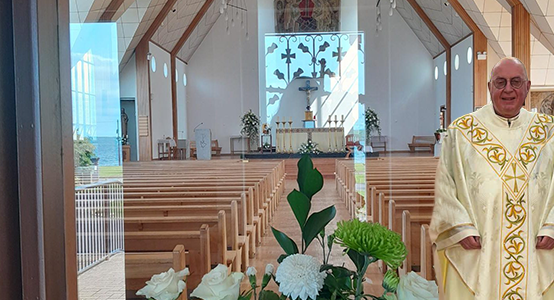
“O GOD, YOU ARE MY GOD; AT DAWN I SEEK YOU; FOR YOU MY SOUL IS THIRSTING” (Psalm 63:2) LITURGY THIS WEEK : As well as praying continually for the faithful departed with special Masses on Monday and Friday, the liturgical calendar this week provides us with two notable saints from the 4 th -5 th centuries: St. Leo the Great (Tuesday), who was a giant and lion of a man as pastor and defender of the unity of the Church (he even persuaded Attila the Hun not to march on Rome in 452!); and St. Martin of Tours (Wednesday), who was a soldier, hermit, abbot, priest and exemplary bishop. It is good to get to know these men and women whom God has put before us as examples of holiness. Their intercession is of great avail to us on our pilgrim way. Previous Week The month of November carries the background affection, memory and prayer for those of our loved ones who have died and are being purified by Love before entrance into the Kingdom. As the old hymn put it, “they are waiting for our petitions, silent and calm.” The Mass is the best way to assist them because it takes our love for them and invests it with the Love of Jesus Himself on the Cross. Like Jesus, those in purgatory will hope with certainty to be able to say, “Father, into your hands I commend my spirit” as they cross the threshold of the Kingdom. There, they will be met by saints such as St. Martin de Porres (Tuesday) and St. Charles Borromeo (Wednesday) and the whole company of heaven. What a moment! What a destiny! Let’s pray for this for Ron Bisset as we perform his burial rites on Thursday. For ourselves, let’s embrace the Cross of Jesus (Friday) in whom alone is our holiness and glory and the power of our own purification. Our life is about preparing for a banquet to which we have all been invited. Isaiah tells us: “On this mountain the Lord of hosts will make for all peoples a feast of rich food.” David tells us in Psalm 23: “You have prepared a table before me in the sight of my foes.” Matthew relates the words of the King: “Tell those who are invited, ‘See, I have prepared my dinner. Come to the wedding feast.’” The readings also show two basic responses to this invitation. First, there are those who rejoice in it, as per the words of Isaiah: “‘This is the Lord; we have waited for him; let us be glad and rejoice in his salvation.’” Second, there are those who say no, as per the words of Matthew: “they would not come …. they paid no attention and went off … they were not worthy.”

THE ANNUAL EDUCATION MASS will be celebrated by Bishop Frank, in Saint John’s, Stevenston on Wednesday, 25 th November at 6pm.
ADULT FAITH FORMATION IN OUR DIOCESE : Copies of the first leaflet, which adapts the programme for personal use, are at the back of the church. Please take one home an d do what you can to join spiritually with the rest of the Diocese to prepare for the Great Jubilee of 2033 under the Bishop’s inspired guidance. I will produce the second leaflet for Sunday 29 th November, the First of Advent.
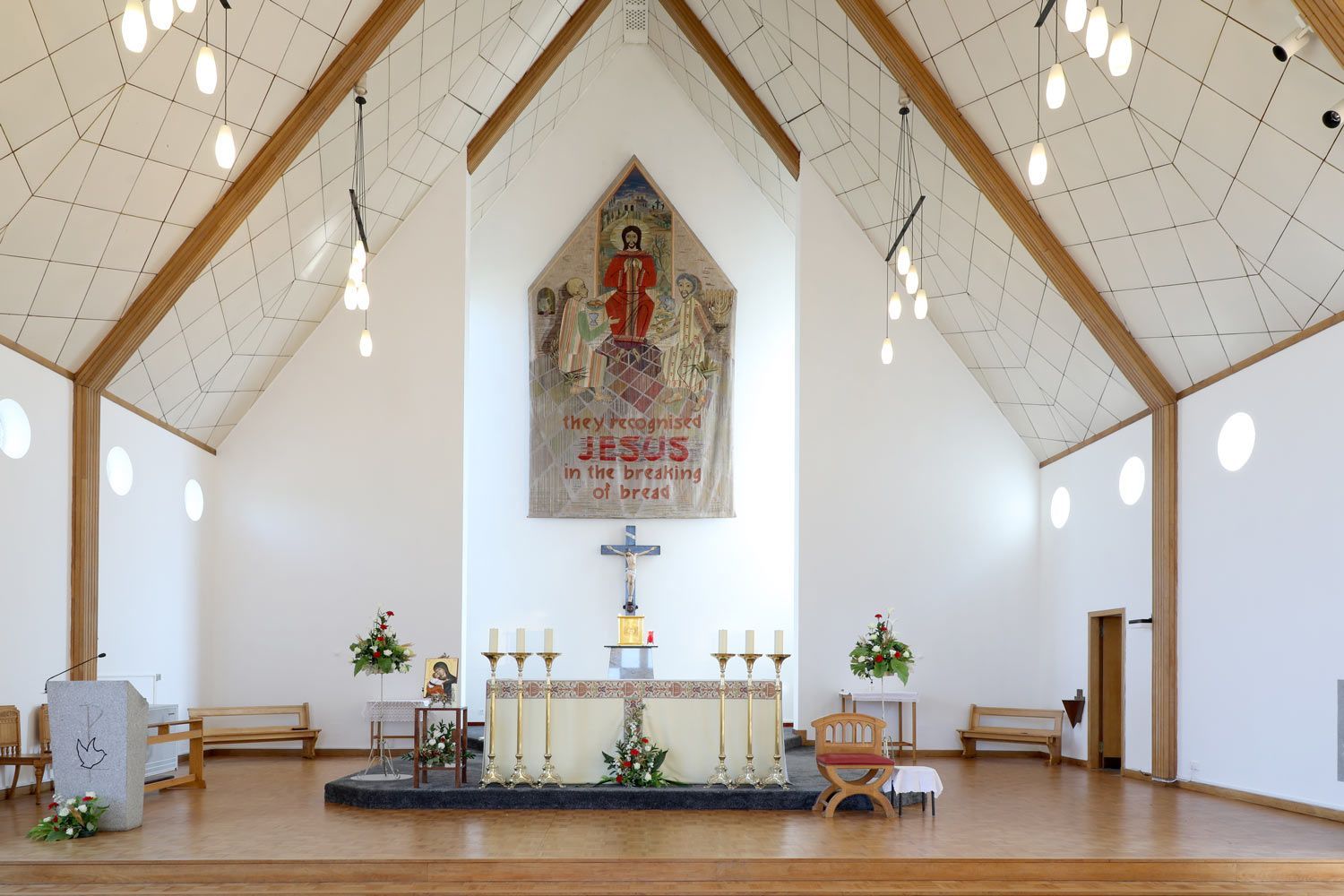
ANOINTING OF RCIA CANDIDATES : Since our candidates have now completed volume 1 of their program, entitled “My Catholic Faith”, I will anoint them at Masses next weekend, 14 th & 15 th November, as a way of signifying and promoting their growth in spiritual strength in the Holy Spirit. They are not being anointed with the oil of the sick! Rather, it is a way of bringing them and their courageous efforts to the attention of the parish community so that we can continue to support them with our prayers, our presence and our friendship. Please make a point of encouraging and welcoming them personally!
Join us on Nov 10 for a meeting on liturgy & worship. Engage with our community at St. Mary’s Hall!
THERE WILL BE NO MASS ON THURSDAY MORNING either in St. Mary’s or in Our Lady’s, Millport, as I must attend a clergy meeting out of town. I will offer Mass at that me eting for those named on our November Lists. Please remember that there is always Mass at 12 Noon in the Benedictine Monastery.