This week's reflections

Fr. Peter • November 22, 2026

Share this article

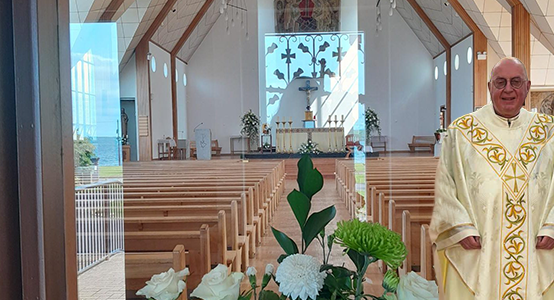
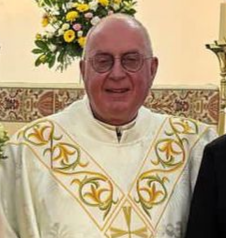
Smiling clergyman in white vestments with gold embroidery, standing indoors before flowers.

Fr. Peter's Reflections


 22nd NOVEMBER.
“In the image and likeness of the king” (Mathew 25)


Liturgy & Fr. Peter's homily


  • This Week's Homily 22/11 /26 - In the image and likeness of the King

    Every human being bears the image and likeness of God. That’s what makes us truly human. Without it, we lose our humanity. When the Son of God became man, in a certain way He united Himself with every human being. He enhanced further the image of God in us. He ennobled our humanity in its very essence, at its very core. That is why, whatever we do to one another, we do to Him. That’s not just a manner of speaking. It is the truth.


    But He is in each of us incognito. We don’t see Him. We struggle sometimes to perceive Him in ourselves, never mind in one another, even with the eyes of faith. The “sheep and the goats” of the parable all respond to the King, “Lord, when did we see you hungry, thirsty, etc.?” They are taken aback, amazed even, that He would identify Himself with their neighbour and, yes, with themselves. 


    It is good for us each to stop and ponder from time to time that Christ is also present in me. When I see my face in the mirror, can I look behind it to see Christ in me? For I, too, am created in the image and likeness of God. He became one with me, too, in His incarnation. As the motto of Pope Leo puts it: we are all one in that One, meaning Christ. 


    This is already true at our conception to this natural life. It becomes even truer at our re-conception to eternal life in baptism. It takes on its most sublime form on this earth when we are one with Him and with one another in the Eucharist. We become one Body, one Spirit in Christ.


    As Jesus puts it elsewhere, we are rooted in Him, the True Vine. We are His branches. This is a metaphor, but it speaks to the reality of our deepest being as individuals and as a race. Being a Christian is intended to bring our humanity to its fullest expression. That can never take place in isolation, but only in communion. Being Christian is not a label: it’s more like a new DNA. I don’t, I can’t exist independently of Christ, as if I had my own private identity aside from Him. Christ lives in me because He gives me life. 


    While this is true most especially through baptism, it is also true for every human being, including those who say they don’t believe in Him. Christ’s presence in me is not conditioned by my belief in Him. He doesn’t need my permission to live in me, to love me, to love through me. He just does. He is sovereign over our humanity. He is our King.


    So true is this that, even if I don’t know or recognise or believe in Him, how I treat Him in my neighbour is the measure of who I am myself judged to be when I come before Him in death. I am blessed or cursed on how my practical love and care for my neighbour has been lived out, or not, because Christ unites Himself with each and with all. 


    In the ancient middle East, the King was seen as the image of God on earth. Christ the King is that perfect image, but He is so in and with us, His royal people. It’s an image which we tarnish when we do not love and serve one another. We can even distort and deform it radically by rejecting love altogether. If we do that, we deny our true selves, we transform the blessing of who we are into a curse. Christ will not recognize us. 


    So, our crown in heaven will be the diadem of our selfless love; on earth, we wear it when we show forth the image of Christ in all we are, have and do, especially in regard to the least of our brethren. We will be the more truly human the more we are truly Christian; and, if faithful, we will, at the last, reign with God in the Kingdom of the blessed.


    Download the homily

  • This Week's Homily - 15th November 2026

    Judgement


    The first thing today’s parable makes clear is that we are servants of God. To serve God is first to love Him with all our heart, soul, mind and strength. There’s no aspect of ourselves or of our lives exempt from serving Him. He must be our constant focus and preoccupation. What He wants must be our top concern. No matter what our situation in life is, He is to be our first thought, our deepest meaning, our greatest joy. “I am a servant of God” is a phrase which should dominate our awareness and stir us to seek His will and His ways. It should fill us with gladness. 


    Then, the parable teaches us another most consoling truth, one that should amaze us: God trusts us. He entrusts to us His property. We have no property of our own; our very selves are His gift to us. What else is this property He entrusts to us? Creation itself, one another, His Son, His Word, His Sacraments, His Church, our loved ones and ourselves. All these are His, something we would do well to remember every day. And He has entrusted them to us. That is, He relies on us, He counts on our responsibility and care. Now you would only entrust your most treasured possessions to someone you truly loved and had full confidence in. Well, in God’s sight, we are each that someone.


    But knowing us perfectly as He does, He entrusts his property to each one in accordance with his or her ability. He neither wants to crush the one with too much nor discourage the one with too little. God is sensitive to our abilities because He Himself gave them to us. And so, He distributes His property accordingly, with exquisite love, fairness and justice. He counts on us to do all we can with what we have been given of whatever kind. All of that said, the talents mentioned in the parable don’t refer, as we might think, to skills or abilities we might have been given. They refer rather to an ancient unit of weight that was worth huge amounts of money. One talent of silver was worth 6,000 denarii. A denarius was a day’s wage. So, one talent was getting on for 20 years of wages reaching over £1 million pounds today, based on the national living wage. So, if the servants in the parable received 5, 2 and 1 talent each, you can see how much the Master trusted them with mere money. Even this fades in comparison to the real property the Lord has entrusted to us, creation, redemption, His Son, the Church, etc..


    The parable then relates the response of the servants to their Master’s trust. Of the first servant, we are told that he went “at once and traded” with the 5 talents. Trading markets are clearly not new. The detail that he went “at once” perhaps explains why the Master gave him the 5 talents. He knew he would respond immediately to his trust. We are nowhere told that the Master asked him to trade with them. Perhaps it was implied. But whatever the case, he certainly used his intelligence and work ethic to go and produce the same again, motivated by how much he had been trusted. Of the second servant we hear only that he made two more talents from the two he had. There’s no further comment. Then, of the third servant, we hear that he digs a hole (it must have been a big one for so much) and hid the talent.


    We, too, are to work with the value of the gifts we have had entrusted to us by God. We won’t do it if we don’t keep God to the fore of our minds and hearts, if we don’t rejoice at being His servants and at having been entrusted by Him with so much. If we forget God, His trust and His gifts, we will begin to act like they are our own property, not His, and we will even risk reducing their value, which is even worse than hiding them in the ground. The Lord wants us to flourish in His abundance, but we will wither if we try to hijack the abundance for ourselves. We entered this world with nothing, and we will leave it with nothing. There are no pockets in a shroud. So, all that passes through our hands in this life, and we ourselves, belong to God. If we try and close our hands on it, we will lose it and ourselves. But if we use it to serve Him in gratitude and joy, we will gain a superabundance in the Kingdom.


    The parable then says that the Lord returns to “settle accounts” with us. We need to be ready to answer Him when He asks us to account for our lives. This settling of accounts need not frighten us. On the contrary, it means that the Lord takes us and our freedom and responsibility seriously. It means that our lives have meant something to God and have not merely been a stream of consciousness with no moral or spiritual relevance. It means that the God who loves and entrusts His gifts to us is also just. Justice reveals the truth of things, of our lives and behaviour, and reveals the consequences of that truth. The first two servants are judged as “good and faithful servants.” The Master judges them to be of intrinsically good character and of having acted with moral excellence. They are objectively trustworthy and subjectively loyal. But he calls the third servant “wicked”, meaning actively and harmfully evil, diseased or worthless, as well as “slothful”, meaning fearful and hesitant in doing what he knew he ought to have done. St. Matthew uses very strong words in the original Greek perhaps to shake us up and make us realize that our inaction or indifference to God’s gifts will turn those very gifts against us. The lazy servant acted on his own limited understanding of the Master’s character and of his fear of that character. He saw the Master as hard, but he failed to see His trust and generosity. He became paralysed by a fear of his own imagining, one which even stopped him from seeing the obvious: to put the money in the bank and gain interest. He cuts a pitiful figure, but one of his own making.


    Then the outcome of these judgments is also described. For the two good and faithful servants, they are told that they have been faithful in little (even though it was a lot in terms of money) and will be placed over much in the Kingdom. We don’t know what that will be, but we do know that we will reign with Christ in eternity if we serve Him faithfully now. For the wicked servant, the destiny is outer darkness, weeping and gnashing of teeth, biblical terms for eternal separation from God. The Church has declared many people to be canonized saints in heaven. She has never declared one person to be in hell, which doesn’t meant no-one is there. But the points of the parable is to lay out for us what the just outcomes will be for the way we behave in this world. So, let us be, live and act like servants of God, glad to be entrusted with so many of His gifts and working gratefully, avidly and perseveringly to produce an abundant harvest of love for the glory of God and for our own salvation.

  • Homily - 8th November 2026

    THIRTY-SECOND ORDINARY SUNDAY, 8th NOVEMBER 2026


    “O GOD, YOU ARE MY GOD; AT DAWN I SEEK YOU; FOR YOU MY SOUL IS THIRSTING” (Psalm 63:2)


    As well as praying continually for the faithful departed with special Masses on Monday and Friday, the liturgical calendar this week provides us with two notable saints from the 4th-5th centuries: St. Leo the Great (Tuesday), who was a giant and lion of a man as pastor and defender of the unity of the Church (he even persuaded Attila the Hun not to march on Rome in 452!); and St. Martin of Tours (Wednesday), who was a soldier, hermit, abbot, priest and exemplary bishop. It is good to get to know these men and women whom God has put before us as examples of holiness. Their intercession is of great avail to us on our pilgrim way.


    Fr. Peters Homily


    “Being ready for the Bridegroom. Homily Notes, 08.11.26


    A question: Do you have a real, personal relationship with Christ? Consider your relationship with your spouse or your children. You give it time, attention, love. You work at it and are careful to avoid anything that could harm it. You think of it when you are absent from each other and find joy in the thought of seeing one another again even after just the working day. You try to please and give joy to one another insofar as possible and will make sacrifices to make that happen. You grow in knowledge and understanding of one another. You grieve, sometimes deeply, if something goes wrong and you try to make it right again as soon as you can.


    All these expressions of relationship apply to a relationship with Christ if it too is to be real and to have meaning in our life. If not, then we risk relating to a mere idea, a concept, of Christ. The Creed itself becomes but a list of statements which, indeed, we might well accept to be true – but imagine you related to your spouse or children in that way. It would be very cold, devoid of feeling. In fact, it would be fairer to say that you did not really know them at all, not in any depth or with any consequence for your life. Or imagine you did have some level of feeling for them but on condition that they became what you expected them to be and not who they actually are. In that case, you would be relating to a caricature of them, not to them themselves. And if you did that, it ought to be no surprise that they might leave you and wonder, for their part, if they ever knew you at all.


    In today’s parable, Jesus expects us to be ready for Him when He comes at the end of our lives and of time. But we simply won’t be if we don’t have a real relationship with him now. Indeed, perhaps He delays in coming to give us time to get ready and be ready. The oil for our lamps consists of all the efforts and sacrifices of prayer and love we have undertaken to show Him that we are grateful for His invitation to know and love Him and to be with Him in the eternal wedding feast. The foolish virgins were also invited and had some of that oil, but not enough. They expected Him to come on their terms and timing, not His. That’s why they were not ready. They did not have the wisdom truly to love Him and abide His time. Despite the invitation, despite having some oil, despite their willingness to form part of the welcoming party, the fact is that they were simply not there when He did come. That was the first tragedy. The second was that the door into the banquet was shut. The third, and perhaps the most chilling, was that the Bridegroom, on hearing them call Him “Lord, Lord”, responds, “In truth I tell you, I do not know you.” What a dreadful thing for someone to hear from the lips of Christ!


    We may protest: but surely Jesus is merciful? Surely, He pardons everyone? Surely, there must be some mistake? Surely, surely! Yes, He is full of mercy, but the time for mercy is before He comes, both at the end of our lives and of time. The time for mercy is now. Wisdom is to develop our relationship with Him now, so that we come to know and love Him deeply and personally now, and so that He can say to us, “In truth I tell you, I do know and love you, too.” But if now we procrastinate and do not take His invitation to heaven as seriously as it demands, then we, too, risk the tragedy of the shut door and the voice of Jesus rejecting us. 


    So, how do we make sure that we have enough oil for our lamps? We must work at our personal relationship with Him. If we are sincerely waiting for Him to come, then we need dispositions and attitudes which sustain us in our wait. The first reading describes some of them. “Wisdom [that is, Christ] is easily discerned by those who love her …. Seek her …. Desire her … who are vigilant on her account.” So, we must stir ourselves to ask the grace of the Holy Spirit truly to love Christ, to discern His presence and will, to seek and desire Him and be vigilant for Him in our thoughts and hearts. “To fix our thoughts on Him is perfect understanding.” He “seeks those who are worthy of Him and graciously appears to them in their paths and meets them in every thought.” To relate to Christ in this way requires hard work. It means taking concrete and gradual measures to detoxify our minds and desires from whatever is at odds with Christ. It also means that our married, family and social relationships need themselves to be opened out as fully as possible to the world of Christ, to the atmosphere of His presence and love, His truth and commandments. After all, He is the one who created and gave us to one another in the first place to love! How can He then be absent from our homes, our conversations, our plans, our decisions? How can we shut the door on Him and perhaps sometimes tell Him that “we don’t know who He is”, not in so many words, but by the ways we ignore Him in practice?


    The Responsorial Psalm today also provides us with the most beautiful and poetic language for a soul that burns with desire for God. “O God, you are my God, for you my soul is thirsting. For you my flesh is pining, like a dry, weary land without water. Your loving mercy is better than life; my soul shall be filled by you as with a banquet. I remember you upon my bed, on you I muse through the watches of the night.” These incredible words of the psalmist are intended also for us. It may seem exaggerated to say that we thirst and pine for God, but if our relationship with Christ does not seek such depth of feeling it won’t ever get beyond mere concepts, ideas, rituals and doctrines. Christ wants us to love Him with all we are and have, as He loves us in the same way. Just as there are deep, ordinary, human feelings, so there are even deeper feelings of the soul and heart. The saints understood this. If our heart is our lamp, then these deep desires and acts of love for Christ are the oil which keeps it burning. The banquet of heaven begins in our hearts here below and, at death, Christ will inflame them with the fullness of eternity. No-one wants anyone to be faced with a shut door or a declaration of rejection by Christ. No-one wants hell for anyone. So, let’s resolutely increase our efforts individually and together to deepen our relationship with Jesus and to seek the help we need to do so. When He comes, may we truly be ready for Him, on fire with love as we see Him face to face and enter through that door to the banquet hall of eternal life.

  • Sunday 1s November

    The month of November carries the background affection, memory and prayer for those of our loved ones who have died and are being purified by Love before entrance into the Kingdom. As the old hymn put it, “they are waiting for our petitions, silent and calm.” The Mass is the best way to assist them because it takes our love for them and invests it with the Love of Jesus Himself on the Cross. Like Jesus, those in purgatory will hope with certainty to be able to say, “Father, into your hands I commend my spirit” as they cross the threshold of the Kingdom. There, they will be met by saints such as St. Martin de Porres (Tuesday) and St. Charles Borromeo (Wednesday) and the whole company of heaven. What a moment! What a destiny! Let’s pray for this for Ron Bisset as we perform his burial rites on Thursday. For ourselves, let’s embrace the Cross of Jesus (Friday) in whom alone is our holiness and glory and the power of our own purification. 


    Our life is about preparing for a banquet to which we have all been invited. Isaiah tells us: “On this mountain the Lord of hosts will make for all peoples a feast of rich food.” David tells us in Psalm 23: “You have prepared a table before me in the sight of my foes.” Matthew relates the words of the King: “Tell those who are invited, ‘See, I have prepared my dinner. Come to the wedding feast.’” The readings also show two basic responses to this invitation. First, there are those who rejoice in it, as per the words of Isaiah: “‘This is the Lord; we have waited for him; let us be glad and rejoice in his salvation.’” Second, there are those who say no, as per the words of Matthew: “they would not come …. they paid no attention and went off … they were not worthy.”

Recent Posts

By Webmaster • November 27, 2026
This annual event will take place on Saturday 28 November in the monastery tearoom from 1.15pm to 4pm. Entrance fee £3, children free. Come along and enjoy a fun afternoon, with Raffle, Tombola, Fancy Goods, Knitwear, Baking, and Jewellery stalls. Donat ion of Prizes and Bottles
By Webmaster • November 27, 2026
Important excerpts from Pope Leo XIV
By Webmaster • November 27, 2026
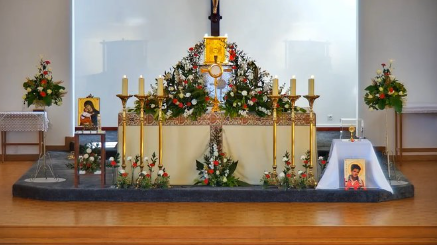
ADVENT: As we all know, Advent gets swallowed up in the commercialization of Christmas. The sales pitch pushes out the true spiritual depth of both Advent and Christmas. Still, I encourage everyone, myself included, to try and consider at least the period up to 17th December (when the pre-Christmas octave begins) as a penitential period. That’s what the Church teaches us. Hence the purple vestments, the absence of the Gloria and the call to fast and abstain. It’s about focusing on Christ’s return to judge the living and the dead and about preparing for that with a more intense prayer and sacramental life. Decide what penance you wish to make as you do in Lent. Reduce screen time, talk less, go to Mass more often, prepare to make a good confession before Christmas, do acts of charity, etc.. Let’s “redeem” Advent for the Lord!
By Webmaster • November 27, 2026
ADVENT SYCAMORE COURSE (St. Mary’s): “Exploring our Faith.” Two Wednesday evenings, Dec. 9th and 16th, 7pm to 8.30pm, in the Church Hall. Why not take some time out during ADVENT to meet other parishioners and explore/reflect on aspects of our faith? Just turn up on the day or add your name to the list in the Porch. It’s an open invitation and all are welcome. For any further information contact Gordon McMillan Tel. 07977-403462 gordonmcmillan7@gmail.com
By Webmaster • November 27, 2026
Further to our posting of the multiple choice quiz recently( details below). Please find the answers for those who wish to explore: ANSWERS TO THE MULTIPLE-CHOICE TEST ON “MY CATHOLIC FAITH' FAITH”: 1-a; 2-b; 3-b; 4-a; 5-d; 6-c; 7-b; 8-c; 9-a; 10-d; 11-a; 12-b; 13-c; 14- a; 15-d; 16-c; 17-false; 18-false; 19-true; 20-false; 21-c; 22-b; 23-b. Dear Parishioners You may have seen from last weekend’s bulletin, our intention to make available the multiple-choice test which I we to our RCIA candidates recently. Here is the test:
By Webmaster • November 27, 2026
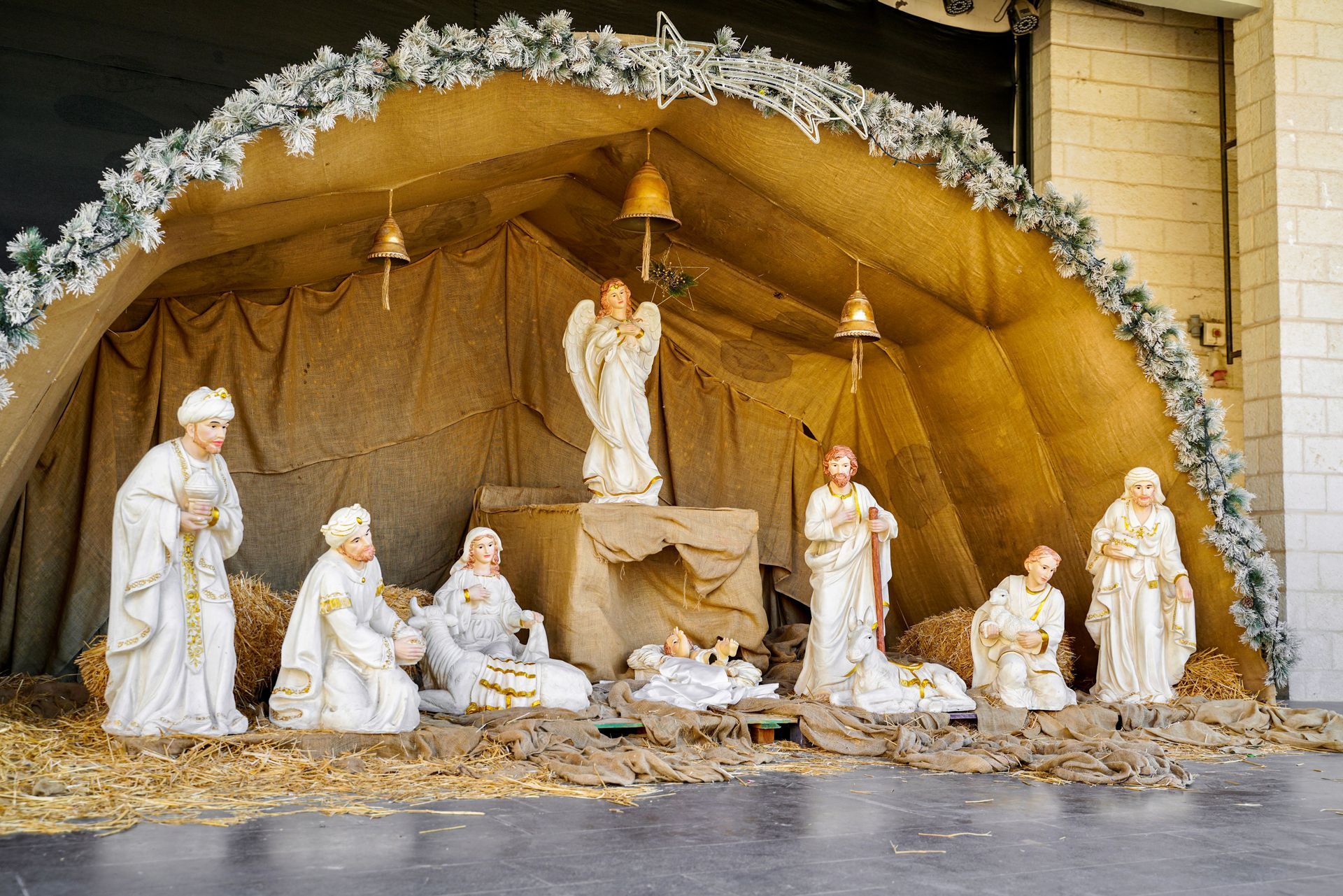
ST. MARY’S PRIMARY NATIVITY PLAY: I am delighted that St. Mary’s parish can once again host the children and community of St. Mary’s Primary for their Nativity Play on Tuesday 8th December at 7pm in St. Mary’s Church. I warmly invite parishioners to come along and celebrate this beautiful event. It’s a lovely way to honour the Immaculate Conception of Our Lady which recurs precisely on the 8th December.

By Webmaster • November 27, 2026
STELLA MARIS CAROL CONCERT & BUFFET (St. Mary’s): This will be held on Thursday 17th December. The concert begins at 6pm and the buffet (in the hall) at approximately 7.15pm. Everyone is welcome to the concert but, if you wish to attend the buffet, you must sign your name on the list prepared at the back of the church. Please use a different line for each person and avoid bunching couples or groups in one line! This will ensure we get a clear idea of the numbers. There is a limited number of spaces, so please sign up soon if you wish to participate in the buffet
By Webmaster • November 27, 2026
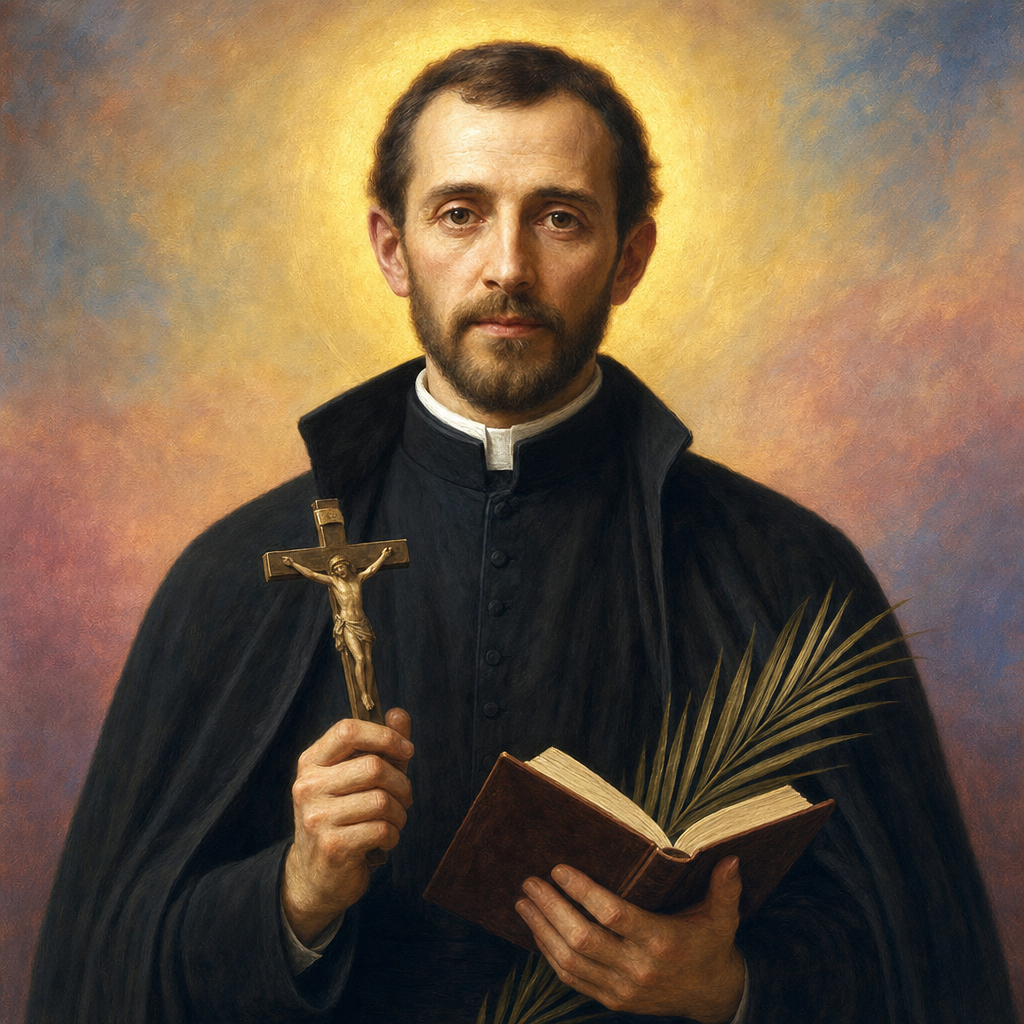
St Edmund Campion (1540-1581)  Edmund Campion was born in London on January 25, 1540, received his early education at Christ’s Hospital, and, as the best of the London scholars, was chosen aged thirteen to make the complimentary speech when Queen Mary visited the city. He then attended St John’s College, Oxford, becoming a fellow in 1557 and taking the Oath of Supremacy on the occasion of his degree in 1564. Two years later he welcomed Queen Elizabeth to the university, and won her lasting regard. He was chosen amongst the scholars to lead a public debate in front of the queen. People were now talking of Campion in terms of being a future Archbishop of Canterbury, in the newly established Church of England. Although holding Catholic doctrines, reinforced by his reading of the early Fathers, he received deacon’s orders in the Anglican Church. Inwardly “he took a remorse of conscience and detestation of mind.” Eventually he went to Douai where he was reconciled to the Catholic Church and received the Eucharist that he had denied himself for the last twelve years. The college was a centre of intellectual excellence and Campion found himself reunited with many of his former Oxford friends. His studies completed he left for Rome, travelling on foot and alone in the guise of a poor pilgrim. He then entered a novitiate with the Jesuits, and spent some years in Vienna and Prague. In 1580, the Jesuit mission to England began. Campion entered England in the guise of a jewel merchant, and at once began to preach. His presence soon became known to the authorities, not least because of the challenge he made, known as the “Challenge to the Privy Council” to his allies and as “Campion’s Brag” to his enemies. As a result his position became increasingly difficult. He led a hunted life, preaching and ministering to Catholics in Berkshire, Oxfordshire, Northamptonshire, and Lancashire. On his way to Norfolk, he stopped at Lyford, near Wantage, where he celebrated Mass and preached both on July 14 and on the following day. Here after a long search he was found in hiding above the gateway. He was taken to London with his arms pinioned and bearing on his hat a paper with the inscription, “Campion, the Seditious Jesuit.” Committed to the Tower of London, he was questioned in the presence (it is said) of Elizabeth, who asked him if he acknowledged her to be the true Queen of England. He replied in the affirmative, and she offered him wealth and dignities, but on condition of rejecting his Catholic faith, which he refused to do. He was kept a long time in prison, where he was twice racked, and every effort was made to shake his defiance. He took part in a number of public debates and reportedly conducted himself so easily and readily that he won the admiration of most of the audience. He was indicted at Westminster on a charge of having conspired, along with others, in Rome and Reims to ‘raise a sedition in the realm’ and dethrone the Queen. He was sentenced to death as a traitor. He answered: “In condemning us, you condemn all your own ancestors, all our ancient bishops and kings, all that was once the glory of England — the island of saints, and the most devoted child of the See of Peter.” After spending his last days in prayer he was led with two companions to Tyburn and hanged, drawn and quartered on December 1, 1581, aged 41. From Universalis
By Fr. Peter • November 24, 2026
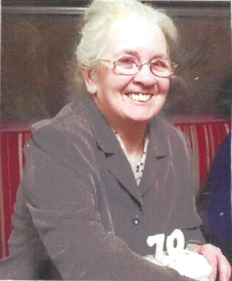
MRS. FRANCES ANN MALY, RIP (Millport): With real sadness, I inform parishioners of the recent death of Frances Maly on 14 th November, aged 80 years, at Woodland View Hospital, Irvine, fortified by the Rites of the Church. May the Lord grant her rest from all her labours and the crown of everlasting happiness in the Kingdom. Let us pray also for all the loved ones she has left behind that the Lord will comfort and console them with the Holy Spirit. The Requiem Mass for Frances will be held in the church of Our Lady of Perpetual Succour, Millport, on Tuesday 1 st December at 12.30pm, and thereafter to the Clyde Crematorium for 2.30pm.
By Webmaster • November 24, 2026
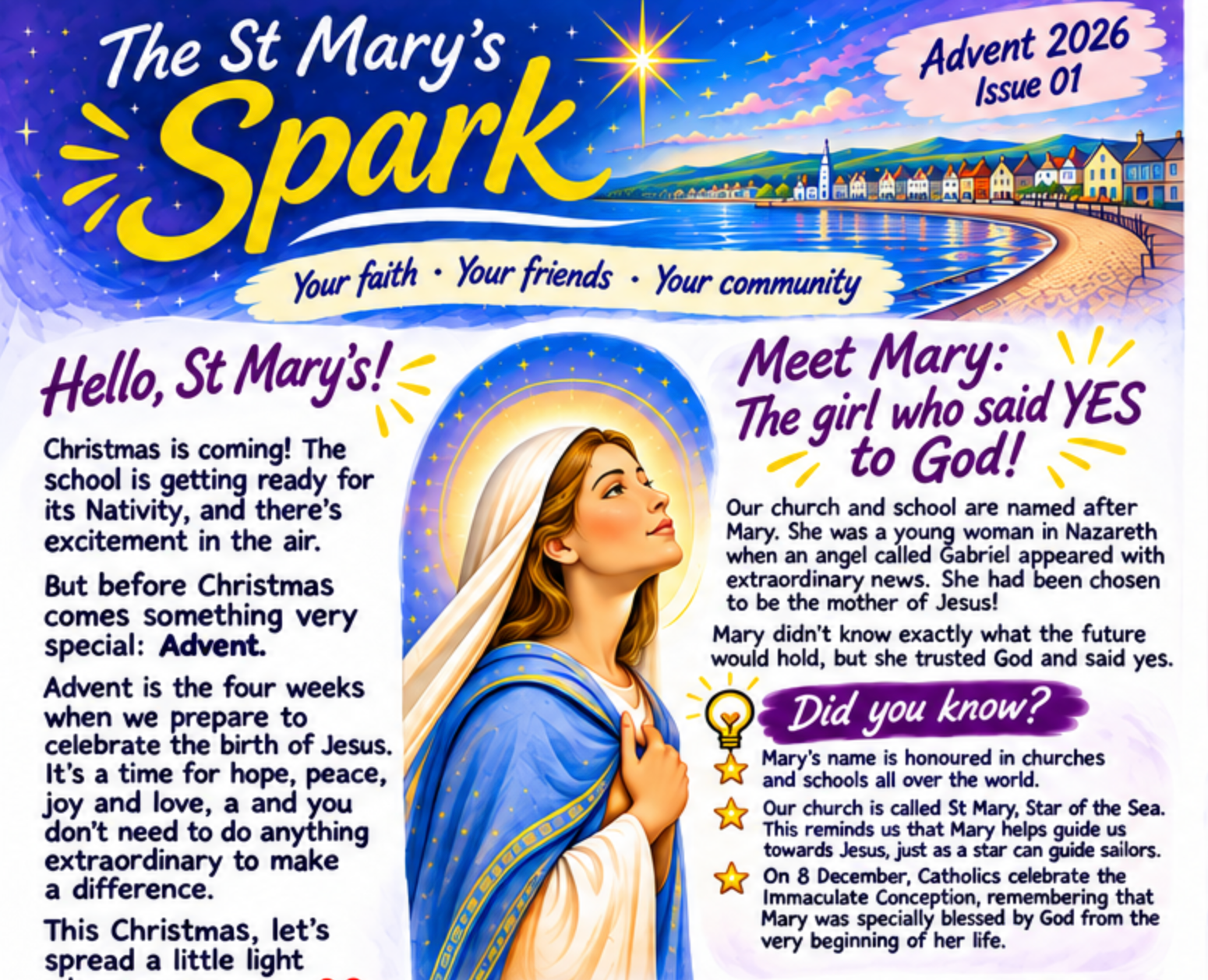
We are delighted to present the Advent edition of The St Mary’s Spark, our new quarterly newsletter designed for young people and families in our parish community! This newsletter serves as an invaluable resource for our young individuals and families. Further information can be found on the page below. Fr. Peter

Show More