Parish History
The story of our parish is one of unwavering faith that has been beautifully sustained across both the mainland and the island — a rich tapestry woven through the years. It began with humble Masses held in a toll-keeper's cottage, where the flickering candlelight illuminated the devotion of those gathered. Today, we are fortunate to have two vibrant churches serving not only Largs, but also the picturesque communities of Fairlie, Skelmorlie, and the Isle of Cumbrae. This journey reflects not just a physical expansion but a deepening of our spiritual community, which continues to thrive and grow in this beautiful corner of the world.
More on parish history
Before the first church
For many years after the Reformation, Largs had no Catholic church. Mass was celebrated only now and then, in the homes of the town's few Catholics, by a priest who travelled from Saltcoats or Greenock by pony and trap. One such venue was the tollhouse at the Noddle Bridge, home of the toll-keeper Con Gallagher, whose descendants are still members of St Mary's today.
The wee church", 1869
In 1869 the first Catholic church built in Largs since the Reformation opened in School Street. It seated 150 and was dedicated to St Mary, Star of the Sea, but it quickly became known simply as St Mary's — or "the wee church".
For many years, the whole winter congregation could be seated on one side of the church. In summer, however, the church overflowed with holiday visitors, and after the First World War as many as five Masses were needed on a Sunday. Clearly, a larger church was needed.
Serving the coast and the island
In those days the priest at Largs was also responsible for Sunday Mass at St Joseph's and St Patrick's in Wemyss Bay, and in Millport during the summer, until a resident priest was eventually appointed to the island. Priests from St Aloysius' College, Glasgow, helped to provide these services.
In the 1920s, winter Sunday Mass was celebrated one week at 9am in Largs and 11.30am in Wemyss Bay; the next week the times were reversed, so that each congregation could enjoy a "sleep-in" every second Sunday.
While Fr Joseph Doherty was parish priest (1923–1933), a site in School Street and Boyd Street was bought for a future church. Parishioners held functions to raise the cost of the land, about £3,000, and to start a building fund.
The war years
During the Second World War, Fr Patrick Clark and then Fr Clement McGowan cared for the spiritual needs of Naval and Army personnel stationed in the town, as well as the families who came to Largs after the Greenock Blitz. Barrfields Pavilion and the Moorings Ballroom at the pier provided space for Mass for the greatly increased numbers. In 1942 Barrfields was requisitioned as a seaplane repair base, but after the war it was again used for Sunday Mass.
A new church for Largs
After the war, fundraising for the new church resumed. In the 1950s Canon McGowan learned that Burnmouth, a house on an impressive sea-front site, might become available, and the Diocese of Galloway bought the property for a bargain price of under £5,000 — a real answer to prayer.
In 1960, fire seriously damaged the old church, and Mass moved once more to the Moorings Ballroom. Young Catholic residents and holidaymakers would attend a crowded dance there on Saturday evening and return for a crowded Mass in the same place on Sunday morning.
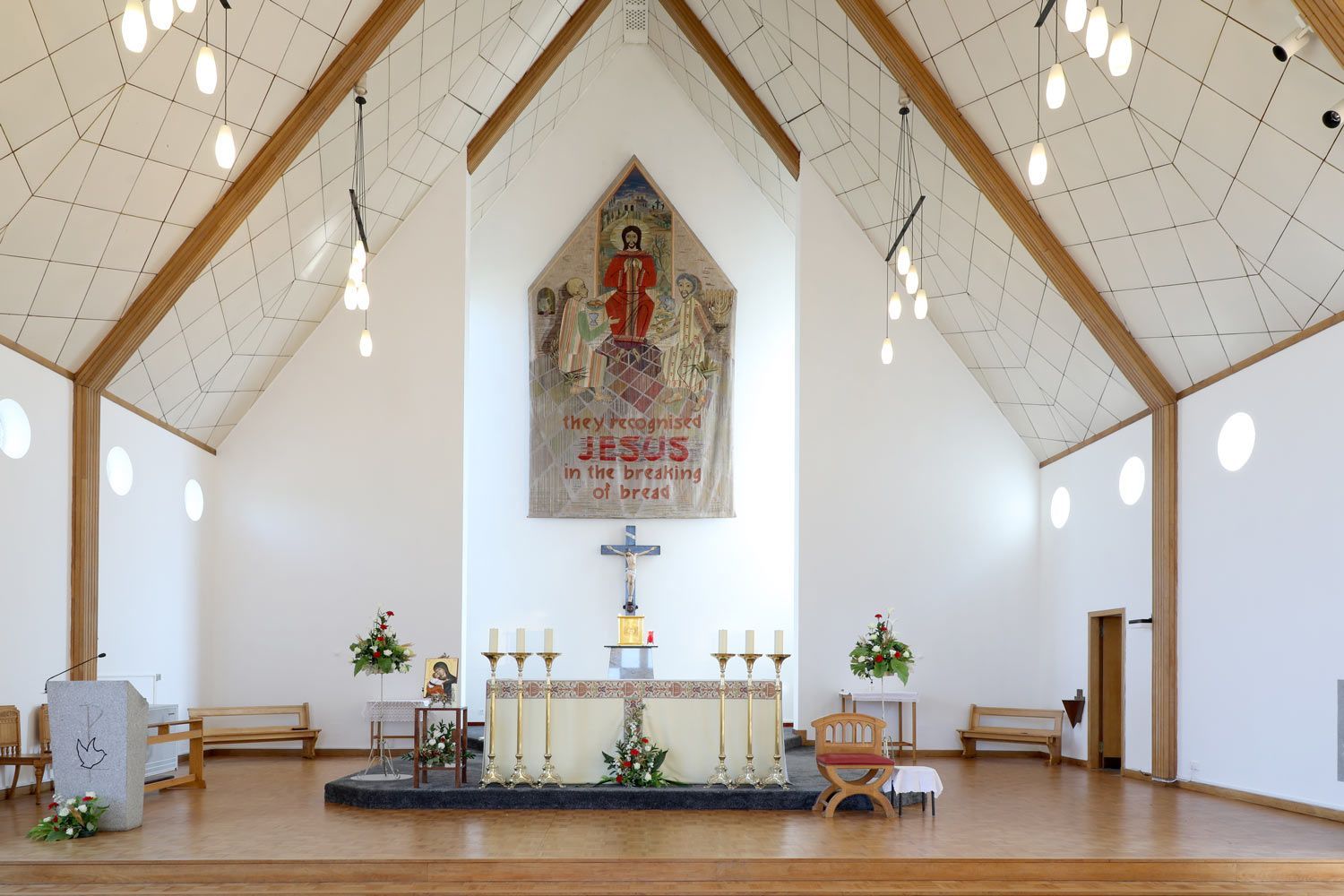
The new church of St Mary, Star of the Sea opened on 24 June 1962, with a Pontifical High Mass celebrated by the Bishop of Galloway, the Right Reverend Joseph McGee. Seating 590, it cost about £80,000, and most of its furnishings were gifts from members of the congregation. It is unlikely that such a church could be built and furnished today for under a million pounds.
Renewal after the Council
Soon after Fr Boyd became parish priest in 1977, the sanctuary was reordered to meet the liturgical requirements of the Second Vatican Council, and a new baptismal font and lectern were added. Some time later, the fine tapestry on the back wall of the sanctuary was commissioned from the Liverpool Metropolitan Cathedral studio.
The church hall opened in 1980, the Rite of Christian Initiation of Adults (RCIA) was introduced in 1985, and the Renew programme ran from 1986 to 1988. Fr Boyd's successor, Fr Shaun Crowley, formed the parish's first Pastoral Council in 1991.
Recent years
In 1998 Fr Alistair Tosh was still settling in as parish priest when violent storms shook the town that Christmas, seriously damaging the church roof. Fr Eamonn Flynn, who succeeded him in 2005, oversaw the installation of a new heating system and a substantial renovation of the church, as well as repairs and improvements to the hall.
In May 2018, Monsignor Peter Magee succeeded Fr Flynn as parish priest of St Mary's, Largs and Our Lady of Perpetual Succour, Millport. Today the parish is preparing a new shrine to Saints Carlo Acutis, Francis and Clare, which will house a first-class relic of St Carlo Acutis.
There is still much to do — but we have come a long way from the wee tollhouse at the Noddle Bridge.
Our Lady of Perpetual Succour, Millport
Across the Firth of Clyde, Millport grew from two earlier settlements, Kames and Kirkton, on the southern coast of Great Cumbrae. As the town developed into a port and later a much-loved Clyde seaside resort, it drew residents, workers and holidaymakers from across Scotland. For many years, island Catholics depended on priests from Largs who crossed to say Mass during the summer, until a resident priest was appointed to Cumbrae.
In 1958, the church of Our Lady of Perpetual Succour was built in College Street, at the heart of the town, to give the island's growing Catholic community a permanent place of worship.
The Parish Today
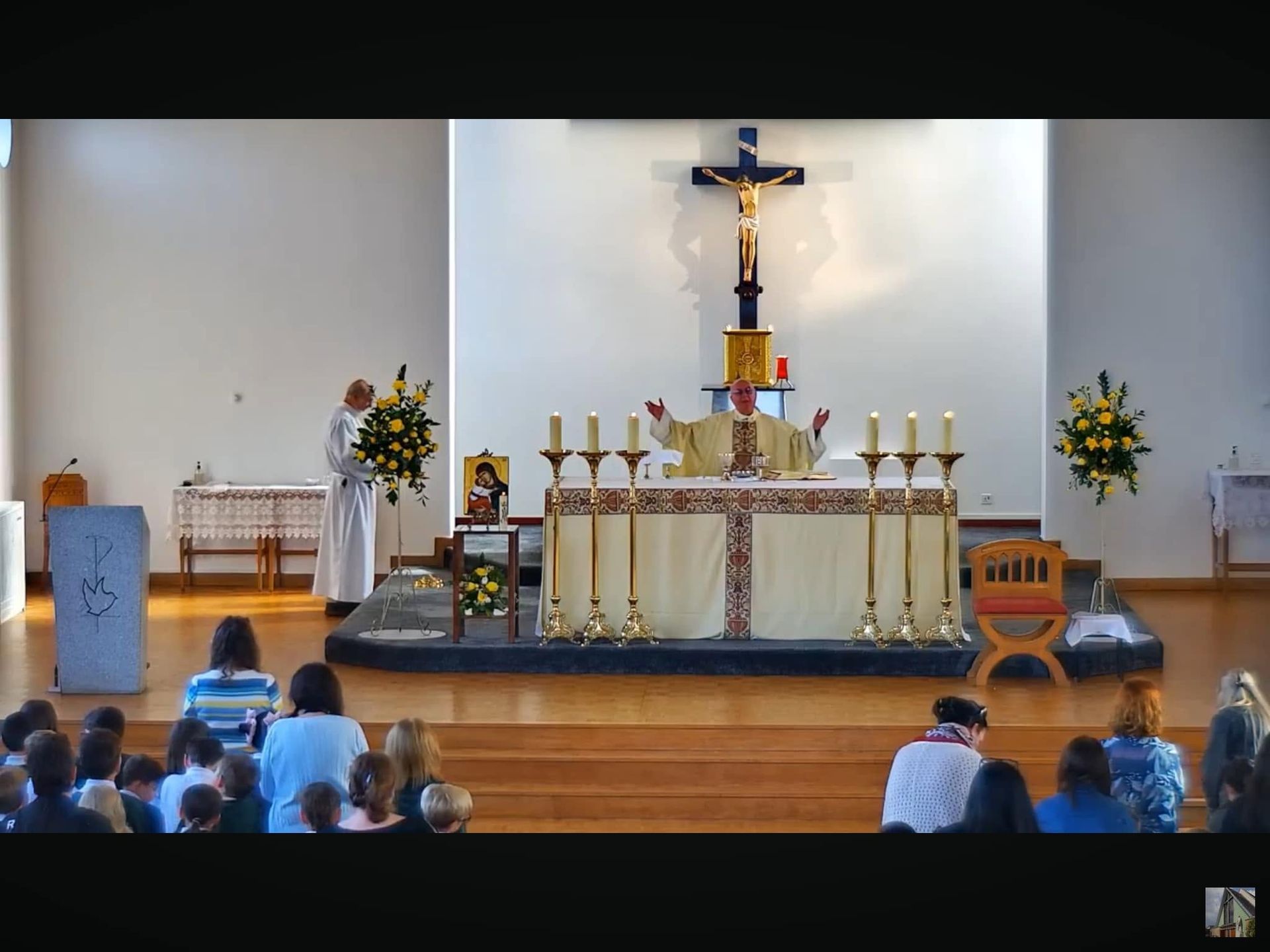
Today, the two churches are united under the banner of the Parish of RC Largs and Millport, creating a vibrant community that honors both its history and its future. Each church brings its own unique character and cherished traditions, enriching the parish as a whole. Together, they share a united parish life that is marked by worship, service, and a deep commitment to faith. The ferry crossing that connects the island of Cumbrae to the mainland continues to serve as a vital link between the two communities.
Catholic children living on Cumbrae attend the island's primary school, fostering a sense of belonging and community right from a young age. Meanwhile, secondary students make the journey to attend classes on the mainland, carrying forward a long-standing connection between the two communities that has enriched their lives through shared experiences and friendships.
This ongoing relationship highlights the importance of their intertwined destinies and the collective spirit of both parishes.