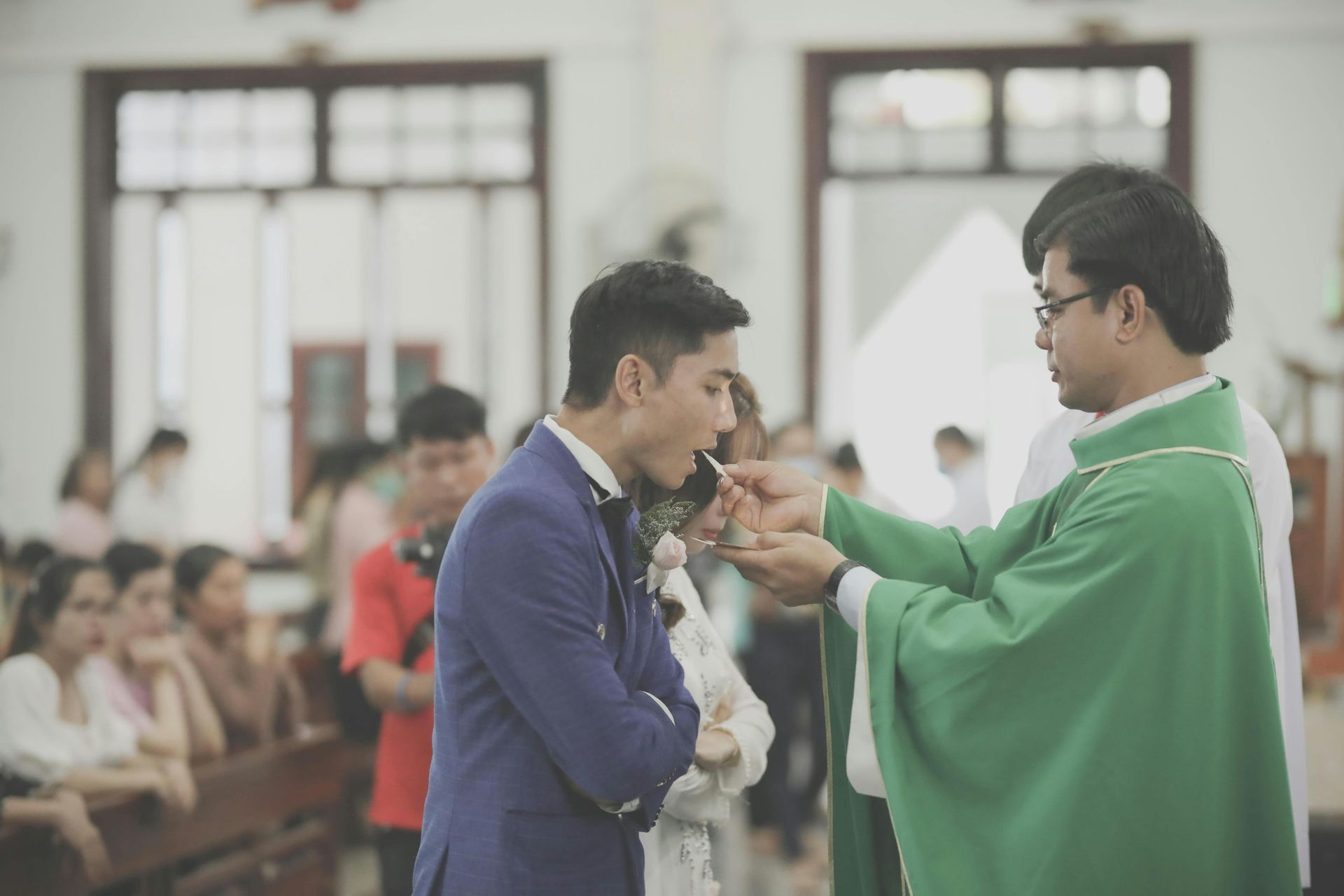
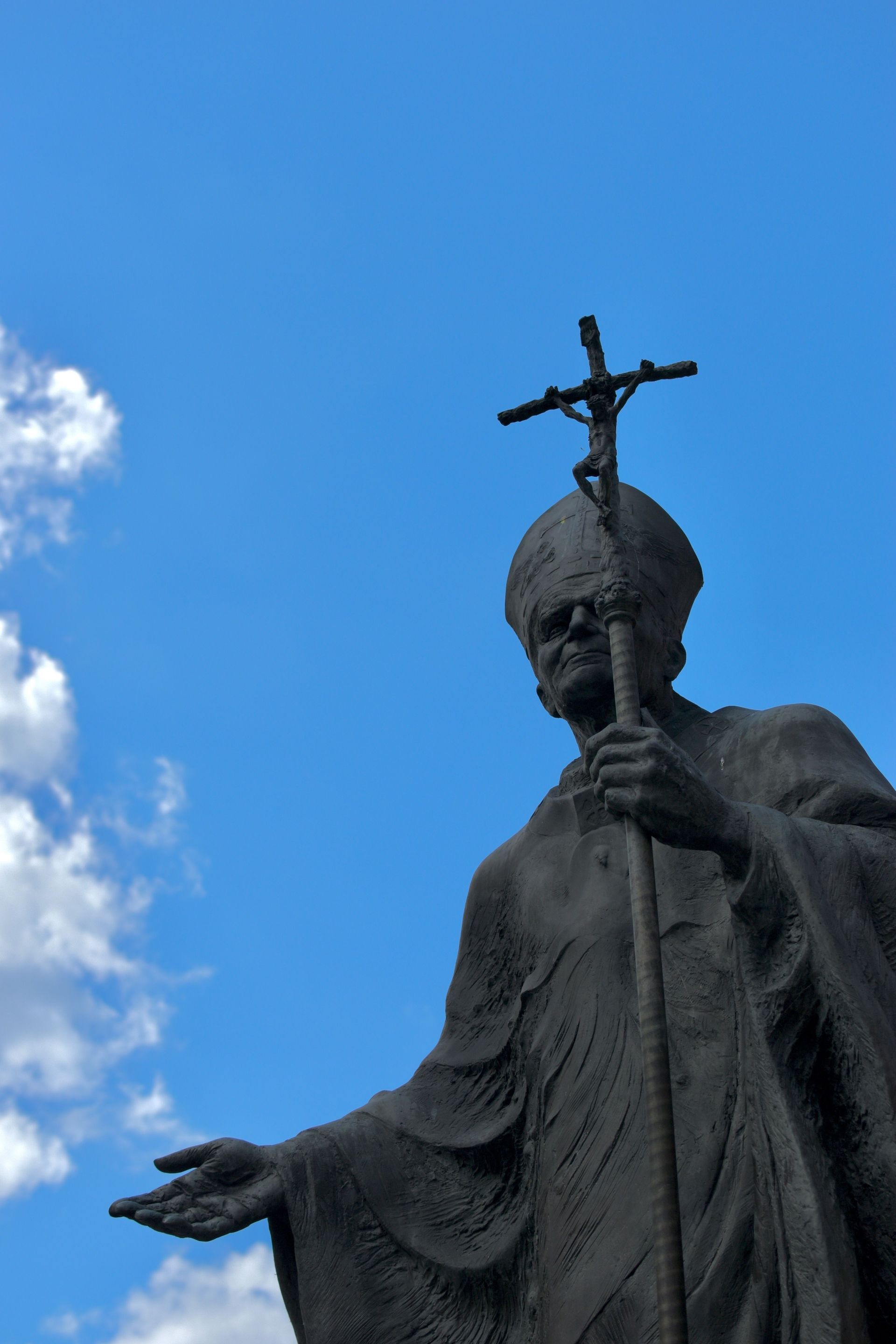
Important excerpts from Pope Leo XIV

ADVENT: As we all know, Advent gets swallowed up in the commercialization of Christmas. The sales pitch pushes out the true spiritual depth of both Advent and Christmas. Still, I encourage everyone, myself included, to try and consider at least the period up to 17th December (when the pre-Christmas octave begins) as a penitential period. That’s what the Church teaches us. Hence the purple vestments, the absence of the Gloria and the call to fast and abstain. It’s about focusing on Christ’s return to judge the living and the dead and about preparing for that with a more intense prayer and sacramental life. Decide what penance you wish to make as you do in Lent. Reduce screen time, talk less, go to Mass more often, prepare to make a good confession before Christmas, do acts of charity, etc.. Let’s “redeem” Advent for the Lord!
Further to our posting of the multiple choice quiz recently( details below). Please find the answers for those who wish to explore: ANSWERS TO THE MULTIPLE-CHOICE TEST ON “MY CATHOLIC FAITH' FAITH”: 1-a; 2-b; 3-b; 4-a; 5-d; 6-c; 7-b; 8-c; 9-a; 10-d; 11-a; 12-b; 13-c; 14- a; 15-d; 16-c; 17-false; 18-false; 19-true; 20-false; 21-c; 22-b; 23-b. Dear Parishioners You may have seen from last weekend’s bulletin, our intention to make available the multiple-choice test which I we to our RCIA candidates recently. Here is the test:
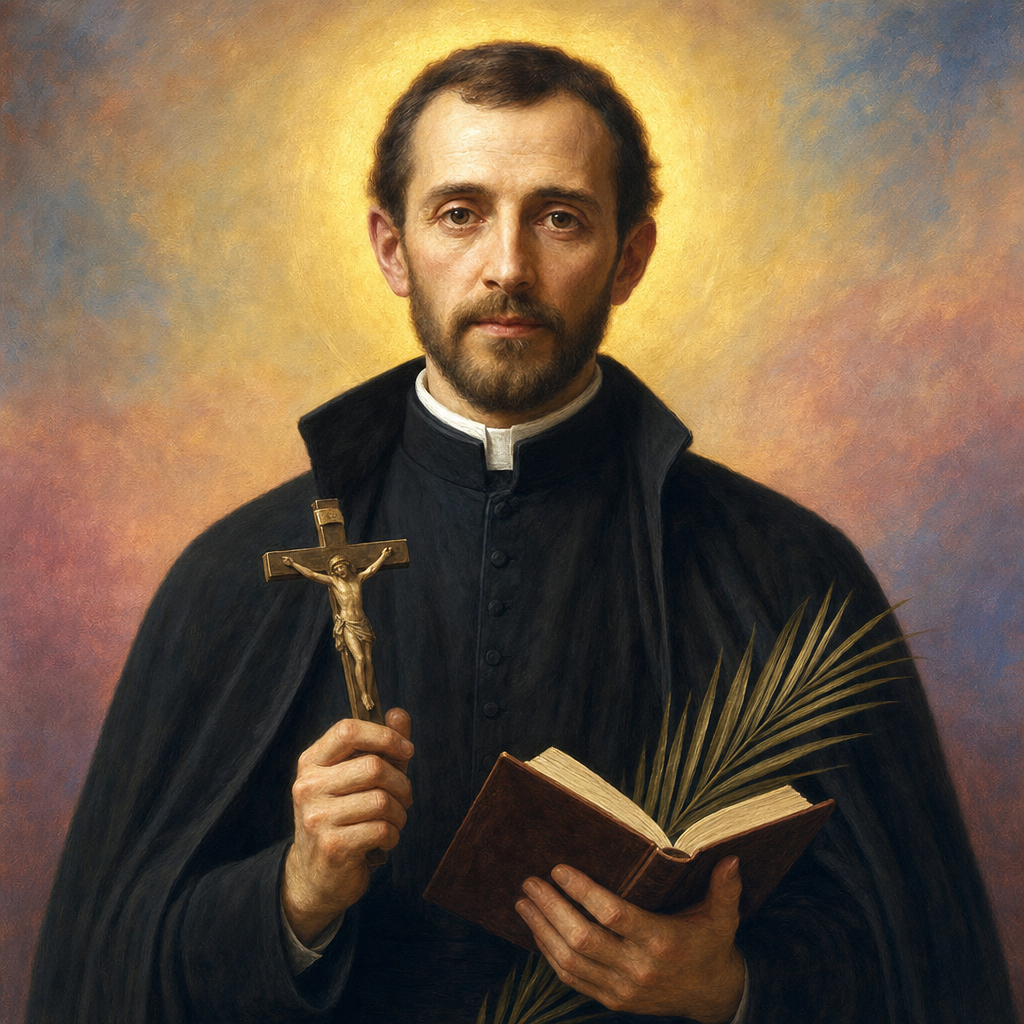
St Edmund Campion (1540-1581) Edmund Campion was born in London on January 25, 1540, received his early education at Christ’s Hospital, and, as the best of the London scholars, was chosen aged thirteen to make the complimentary speech when Queen Mary visited the city. He then attended St John’s College, Oxford, becoming a fellow in 1557 and taking the Oath of Supremacy on the occasion of his degree in 1564. Two years later he welcomed Queen Elizabeth to the university, and won her lasting regard. He was chosen amongst the scholars to lead a public debate in front of the queen. People were now talking of Campion in terms of being a future Archbishop of Canterbury, in the newly established Church of England. Although holding Catholic doctrines, reinforced by his reading of the early Fathers, he received deacon’s orders in the Anglican Church. Inwardly “he took a remorse of conscience and detestation of mind.” Eventually he went to Douai where he was reconciled to the Catholic Church and received the Eucharist that he had denied himself for the last twelve years. The college was a centre of intellectual excellence and Campion found himself reunited with many of his former Oxford friends. His studies completed he left for Rome, travelling on foot and alone in the guise of a poor pilgrim. He then entered a novitiate with the Jesuits, and spent some years in Vienna and Prague. In 1580, the Jesuit mission to England began. Campion entered England in the guise of a jewel merchant, and at once began to preach. His presence soon became known to the authorities, not least because of the challenge he made, known as the “Challenge to the Privy Council” to his allies and as “Campion’s Brag” to his enemies. As a result his position became increasingly difficult. He led a hunted life, preaching and ministering to Catholics in Berkshire, Oxfordshire, Northamptonshire, and Lancashire. On his way to Norfolk, he stopped at Lyford, near Wantage, where he celebrated Mass and preached both on July 14 and on the following day. Here after a long search he was found in hiding above the gateway. He was taken to London with his arms pinioned and bearing on his hat a paper with the inscription, “Campion, the Seditious Jesuit.” Committed to the Tower of London, he was questioned in the presence (it is said) of Elizabeth, who asked him if he acknowledged her to be the true Queen of England. He replied in the affirmative, and she offered him wealth and dignities, but on condition of rejecting his Catholic faith, which he refused to do. He was kept a long time in prison, where he was twice racked, and every effort was made to shake his defiance. He took part in a number of public debates and reportedly conducted himself so easily and readily that he won the admiration of most of the audience. He was indicted at Westminster on a charge of having conspired, along with others, in Rome and Reims to ‘raise a sedition in the realm’ and dethrone the Queen. He was sentenced to death as a traitor. He answered: “In condemning us, you condemn all your own ancestors, all our ancient bishops and kings, all that was once the glory of England — the island of saints, and the most devoted child of the See of Peter.” After spending his last days in prayer he was led with two companions to Tyburn and hanged, drawn and quartered on December 1, 1581, aged 41. From Universalis
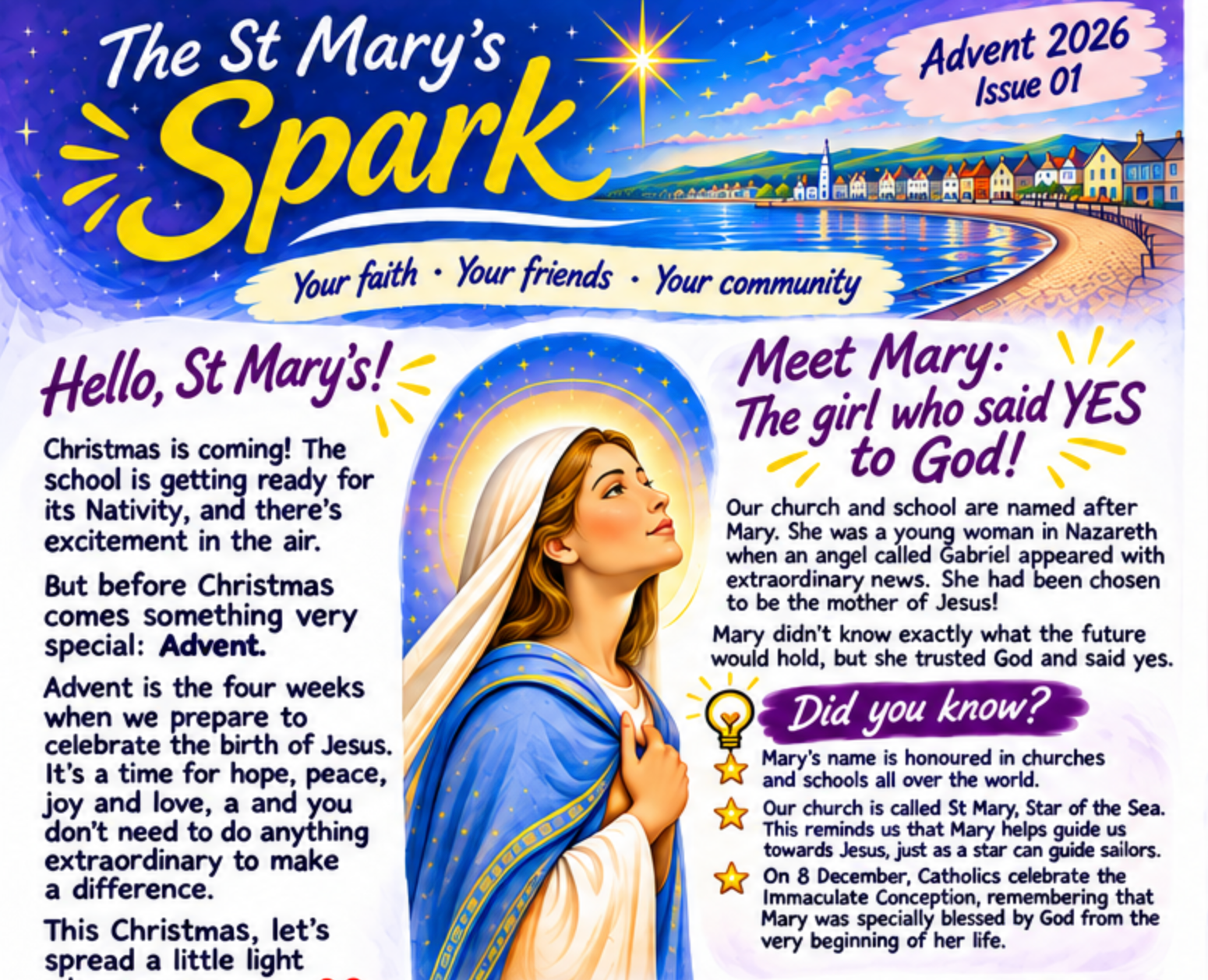
We are delighted to present the Advent edition of The St Mary’s Spark, our new quarterly newsletter designed for young people and families in our parish community! This newsletter serves as an invaluable resource for our young individuals and families. Further information can be found on the page below. Fr. Peter
Saint Columbanus, Abbot (540? - 615) He was born in Ireland before the sixth century and became a monk early on, well-versed in sacred and secular literature. At 45, he left for Europe, founding three monasteries in present-day France, with a strict monastic rule based on Irish practice. King Thierry II of Burgundy admired Columbanus, but his criticisms of the king's lifestyle angered Brunhild, Thierry's grandmother. As a result, Columbanus and other Irish monks were ordered deported, but they escaped. After failing to evangelize pagan tribes near Zürich, they reached Italy, where Columbanus established the Bobbio monastery and died in 615. The Rule of St Columbanus was later replaced by the milder Rule of St Benedict. His writings, some addressing ecclesiastical controversies, are among the earliest evidence of Irish Latin knowledge. Portions of his “Instructions” remain in the Office of Readings, showcasing his passionate and rhythmic writing style.
St Margaret of Scotland (1046 - 1093) Saint of the week: Monday 16th November St Catherine of Scotland was born in Hungary of Anglo-Saxon and Hungarian parents. When William of Normandy conquered England she found refuge with King Malcolm III of Scotland, and they were married in 1070 and had eight children. She reformed the royal court, founded monasteries, and supported major reforms of Church life. She died in Edinburgh on 16 November 1093. She is remembered for the happiness of her marriage, for her devotion to prayer and learning, and especially for her generosity to the poor.

SPECIAL COLLECTION: CATHOLIC EDUCATION: All Masses, 14-15 November.

Join us for the St. Mary's Primary School Christmas Fayre on Nov 17. Enjoy activities & donate for stalls. Get tickets now!
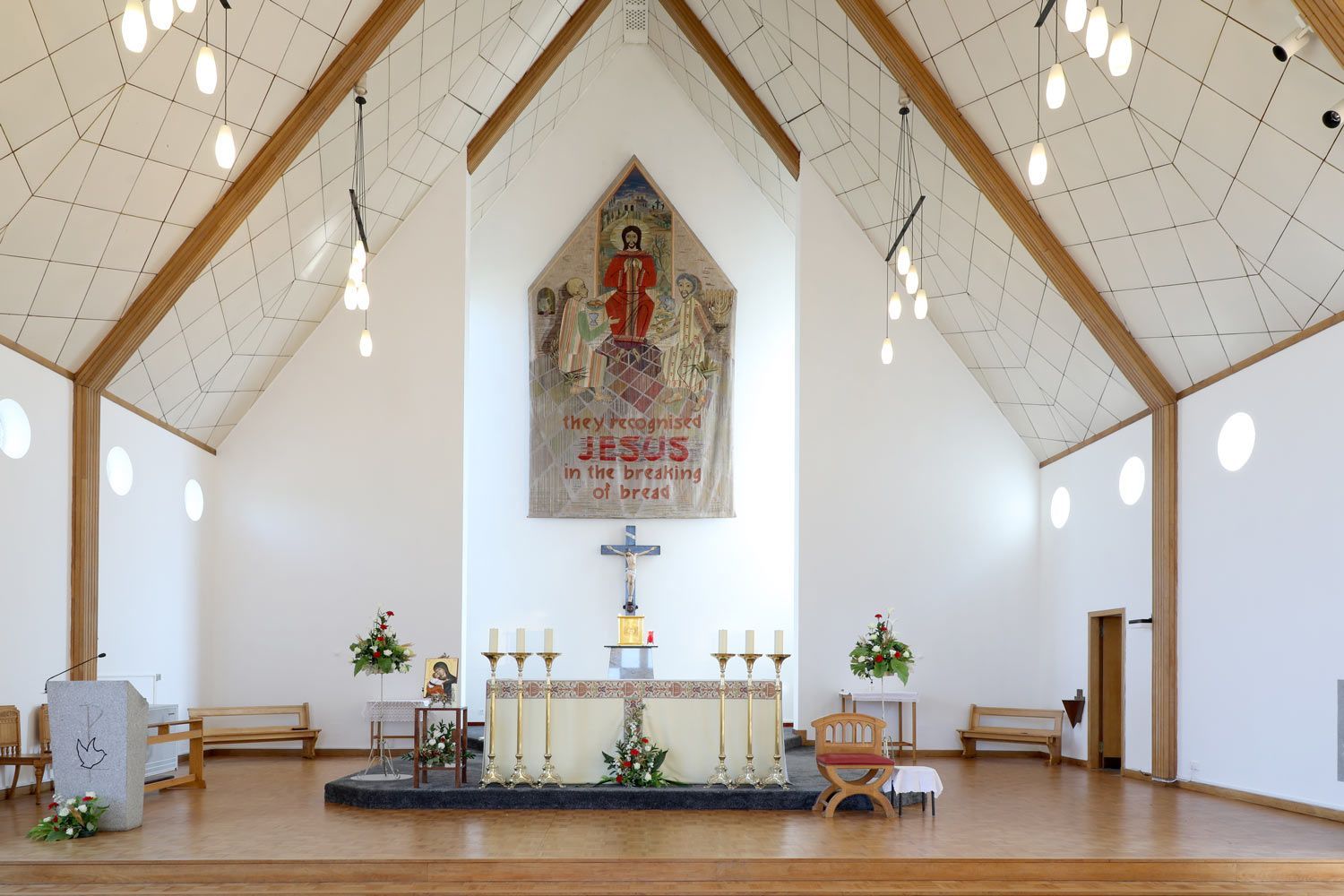
Join us for the anointing ceremony for RCIA candidates on November 14th & 15th. Support their spiritual journey with prayers.