2023 - Corpus Christi Exhibition
Assisi Visits
Gallery
Websites
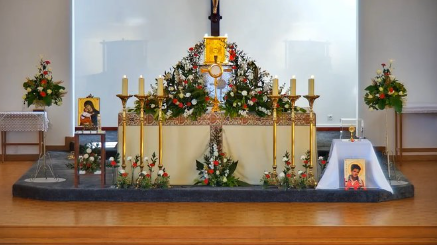
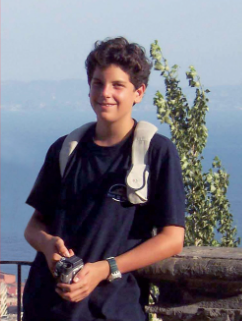

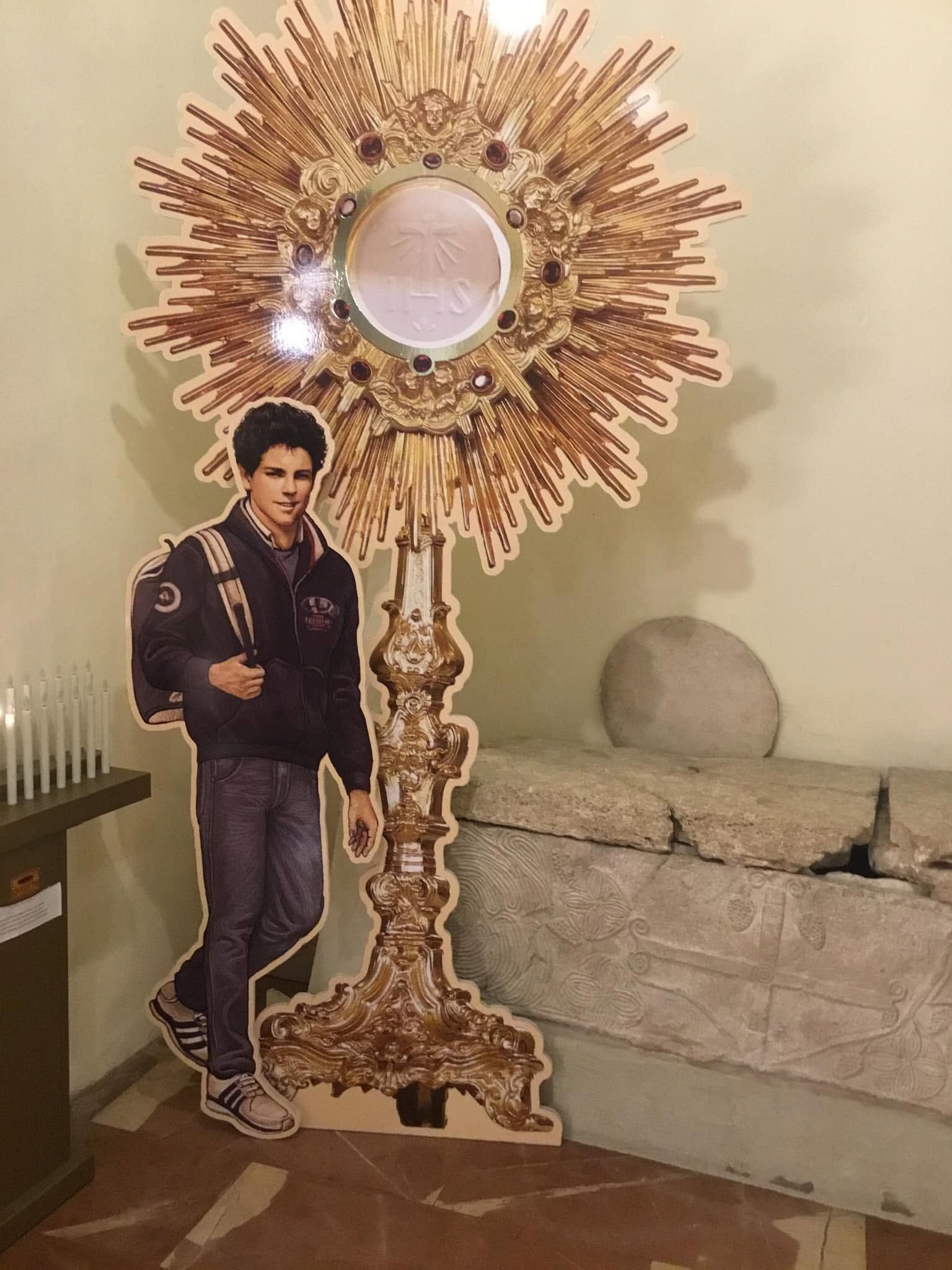
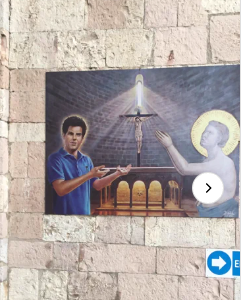
Suffering of Blessed Carlo Acutis Limits of talk: personal reflection on some aspects of CA’s suffering on basis of my limited knowledge and understanding of him. His parents’ lack of faith: a “deprivation” in earliest years. God worked it to his advantage through the believing nannies that came his way. Perhaps the fact of no siblings? Again God used it. School life: suffering of his empathy and compassion, of the mockery he received, of standing up for the bullied, the harassed girls, the Church’s teaching, his purity and devotion to Jesus (my life program is always to be near Jesus). Socially: he felt deeply for the suffering of the poor and the immigrants. Spiritually: self-denial (non io ma Dio) in self-discipline and in consistency and perseverance in living out his own originality (non fotocopia). CA clearly underwent a gradual process of realising how different he was from others, not so much in externals as internally. This will have led to a certain inner solitude, humanly speaking. He will have felt misunderstood by others but himself have understood this misunderstanding of him: he will have seen that because they did not have the kind of relationship with Jesus which he had, they would not be able to understand why he acted as he did. When Christ draws someone closer to himself it always involves a process of detachment from others and from self – not a detachment from loving them, but from attaching to his love for them a greater importance than the love for Christ. This detachment is the way of the Cross: it leads to a turning upside down and inside out of the priorities we humans usually have. When Christ captures the heart, it means a total reassessment of our lives. In a way known only to Jesus and to Carlo, there must have occurred a critical point of no return. At some point, Carlo realised that he was no longer just to be like Christ for others here below, but to become Christ for others from heaven above. We can only really become Christ for others when we realise we are Christ’s alone. In some way, it reminds me of St. Paul who told the Philippians that he would rather be gone and be with Christ, but that he would probably remain alive in the flesh for their sakes. In another way, of course, it is also true that we can do more for others from heaven than we can do on this earth. How do we know that Carlo realised that a point had been reached in his life in Jesus that pointed to an early death? Carlo recorded a video message two or three months before he died in which he explicitly says “sono destinato a morire”: I am destined to die. He wasn’t talking about some date in many decades’ time, because he had already intimated to his mother that he would die young and the exact cause of his death. Christ’s taking of Carlo to himself interiorly translated exteriorly into Carlo’s passion, the physical suffering that would transform him into the crucified Jesus. I want to approach Carlo’s final suffering by drawing some parallels with the Passion of Jesus himself. Obviously, it is not Carlo, but only Jesus who saves us and equally obviously the passion of a redeemed sinner is only a faint reflection of Christ’s own passion. Jesus predicted his passion no less than three times, according to the Gospel. “The Son of man is destined to suffer grievously.” Carlo did the same: twice he told his mother and, when he went into hospital he told her again, “I will not be getting out of here.” Then there is his video message in which he uses the word “destined”, to die. Jesus predicted with certainty how he would die, by crucifixion. Carlo told his mother that he would die of a brain haemorrhage. Jesus accepted his death in humble obedience to the Father. Carlo accepted his destiny in a similar way. There’s no protest in the video, but serenity and simplicity. Submission to a higher Will. Both Jesus and Carlo were young, good people, with, as we would say in our all too human fashion, “with their life ahead of them.” Incident in Assisi last week of young father who expressed sorrow that Carlo had died so young). Jesus describes his death as the grain of wheat that falls to the ground and dies and yields a rich harvest. The grain of wheat can easily be read as the Eucharist, which is the bread of life because the Lord died. Carlo’s faith in the Eucharist and deep and sustained love for and reception of it conformed him to Christ the Grain of Wheat. Carlo has died, and just look how rich already is the harvest he is yielding by Christ’s power. Jesus’ sufferings deformed him over night: “He seemed no longer human.” Carlo’s mother writes movingly and poignantly about her horror in seeing Carlo’s physical deterioration in the course of the short period he was in hospital. Looks are no match for the barbaric reality of our mortality. Jesus offered no resistance and made no complaints, but trusted to God. When the women of Jerusalem wept for him, His response was to deflect and reflect their compassion back upon them. When Carlo was asked about his pain in leukemia, he responded that there were many who suffered more than he. And when the nurse asked him if she should wake his mother to come to him in his final hour, he said to leave her alone, since she was very tired and would only worry more. Paul tells us that Christ sacrificed himself so that the Church would be spotless and holy. Carlo offered his sufferings explicitly for the Church and for the Pope, that is for the Mystical Body of the same Lord who sacramental body he loved so dearly. Christ poured out his last drop of blood for our salvation. Carlo’s death was not so bloody, yet it was a brain haemorrhage which took him in the end. Carlo died on a Thursday, the Day of the Eucharist. But Thursday contains the Friday, the Cross and the Sunday, the resurrection. An obvious difference between Christ and Carlo is that Christ’s tomb is empty. Carlo’s is yet to be emptied. That it will be emptied one fine day is the basic and certain hope we all have because of Christ. And Carlo knew it. He knew that from heaven he would be able to send signs to his mother. May be what he didn’t realise was the Christ would be sending him to bring so much hope and consolation to so many from one end of this broken world to the other, even to wee places like Fairlie, Skelmorlie, Millport and Largs. We all love Carlo’s phrase, “non io ma Dio”, not I but God. Now, “io” is IN “Dio”: i.e. who I am is in God’s great I AM. My story can only have meaning to the degree that it is IN God’s story. There is no other story. The story of every saint and of every human being who lives authentically is God’s story of love being told over and over again. That’s especially true of our suffering, as Blessed Carlo has shown us. He joins that immense army of men and women from across the ages who now stand before the Lamb who was slain. May it please the Lord, through Blessed Carlo’s intercession, to join us to them when our highway to heaven reaches its destination. Fr. Peter, 13.10.23
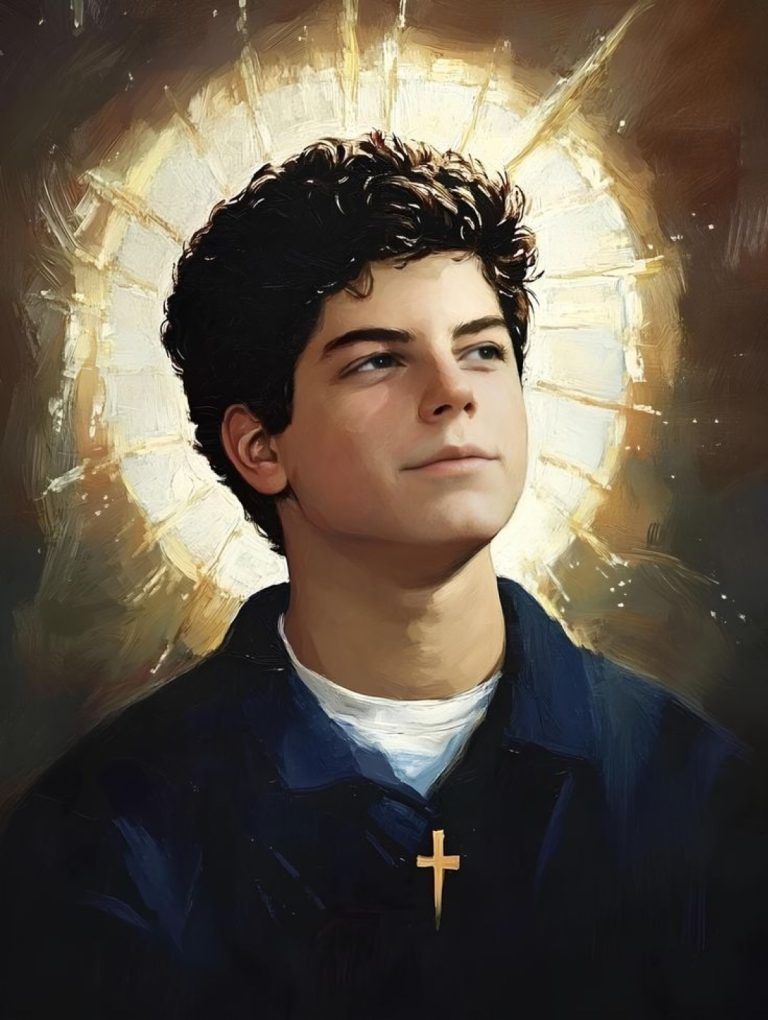
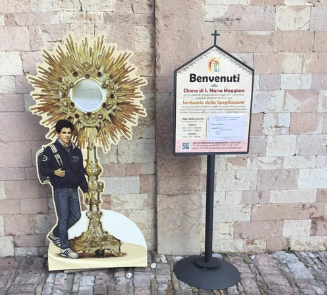
Learn about the new shrine for Saints Carlo, Francis & Clare at St Mary, Star of the Sea. Stay updated on its progress!
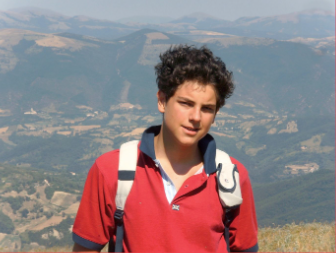
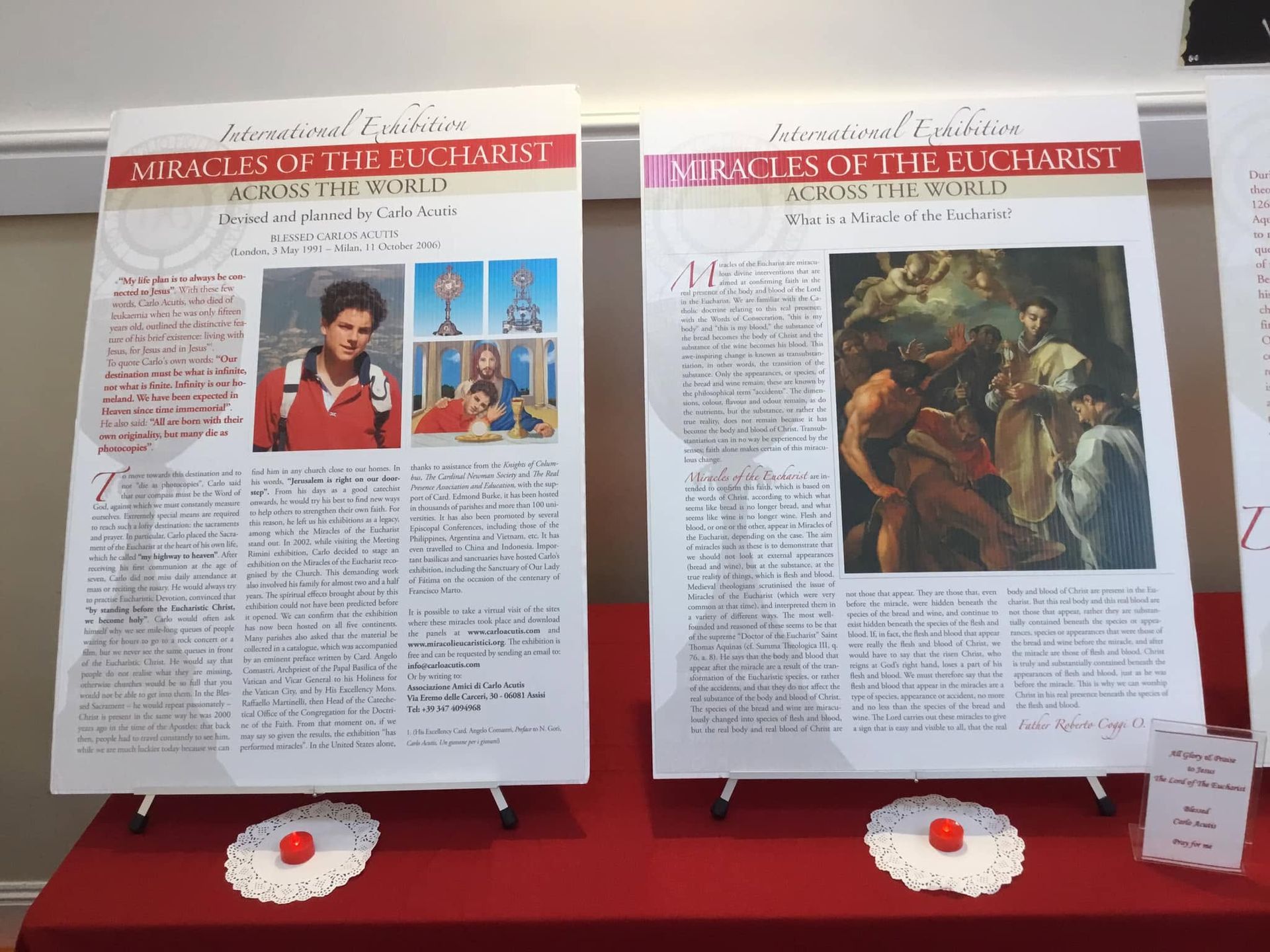
Blessed Carlo Acutis: Some notes on his Eucharistic life, 19.09.24 Posted on 20/09/2024 Posted By: Peter Magee Categories: B. Carlo , Eucharistic Awakenings Carlo’s Parents were not practising, but had a basic faith; they had Carlo baptized. Many fathers of the Church speak of the “natural desire for God” in the human being, and even to see the face of God. As we know, it gets suffocated by so many things in this life. In the baptized, like Carlo, this natural desire is enhanced, heightened by divine grace. This, too, sadly, can get suffocated. Carlo would have followed so many today who fall away but for his Polish nanny, Beata. She had a lively faith, was practising, and had great devotion to JP2. Children of 3-4 years begin to ask big questions about life. Carlo did the same to his mother and to Beata. Beata was first to take him to Mass and to speak of Holy Communion to Carlo. He accepted as a child does that what he was taught is true especially because it was Jesus who said, “this is my body.” Before going to school even, Carlo pestered his mother to take him to see Jesus. These awakenings morphed into pestering and persistence and insistence. He would make the sign of the Cross in passing the church, possibly learning this from Beata or from the Irish or Scottish nannies he also had. Such was the strength of his baptized desire to receive the Eucharist, he managed to convince everyone who mattered that he could receive it two years sooner than normal. He was a daily communicant by the age of seven. We are disheartened by the number of parents who don’t practice and may not believe. We see the deleterious effect of that on children: no-one speaks to them about the things of God in direct, convincing and simple terms. Yet a child is constitutionally open to God, to faith, like Carlo. Carlo’s intensity of desire was probably unusual, a gift of Christ preparing him for his call to holiness, but the desire is still there and needs fed and educated by believing parents or godparents. Eucharistic Engagement By engagement, I mean Carlo’s participation in daily Mass and his adoration before and after Mass and at other times. The Mother Superior of the monastery where Carlo received his first holy communion at age seven said that: “while Carlo was reverent during the Mass, as the time drew near for him to receive the Eucharist, he began to show signs of ‘impatience’ and he began to move as if he could no longer sit still. After receiving Jesus for the first time, it seemed that something had happened to him, only known to him, something so big that he could not contain.” From fidgeting, he entered a calm stillness, evident to all around him. After the powerful experience of his first Communion, Carlo made a personal resolution to go to Mass every day. He would make the effort to wake up early and do whatever was needed to make it to Mass. In addition to bringing his parents along with him, he frequently invited others to join him as well. He said that “you go straight to heaven if you participate in the Mass each day.” And, boy, did he long to go straight to heaven! Another of his teachings is: “The more we receive the Eucharist, the more we will become like Jesus, so that on this earth we will have a foretaste of heaven.” Carlo recognized that the soul who commits to daily Mass is brought daily closer and closer to heaven and to the gift of salvation. After receiving Jesus in the Eucharist each day, the simple prayer that Carlo would say was “Jesus, come right in! Make yourself at home!” This humble prayer to Jesus as a close friend shows us the simplicity of eucharistic faith. Pope St. John Paul II refers to the “Eucharistic amazement” we should both ask for from God and seek to develop in ourselves. For Carlo, that amazement grew through the practice of eucharistic adoration. Before or after Mass, Carlo would spend long periods of time adoring Jesus in the Eucharist. He would make a point to attend eucharistic adoration two to three times each week to speak simply to Jesus about the desires of his heart. Carlo realised that it is the Eucharist which draws out of us the true original person we are meant to be. He would see many around him try to be their own individual selves, but without their noticing it, most, if not all, were simply just following the crowd, being just like everyone else. That’s where his little teaching came from, “everyone is born original, but most die as photocopies.” Maybe I could adapt another of his phrases: the Eucharist is not only the highway to heaven but also the highway to being your true, original self. Being the original person God wants you to be is really just another way of talking about personal holiness. Another little Eucharistic teaching of Carlo is that “people who stand before the sun get a tan, but people who stand before the Eucharist get holiness.” The Eucharistic wisdom of Carlo was not learnt from books, but from living a Eucharistic life. Carlo’s engagement with the Eucharist also led him to see that devotion to it and to the Sacred Heart are one and the same thing. He had a great devotion to St. John, the Beloved Disciple, because he leaned on the heart of Jesus at the Last Supper. For Carlo, this was an act of Eucharistic adoration. Carlo’s engagement with the Eucharist both in the devout participation in daily Mass and in frequent adoration, both before and after Mass, as well as 2-3 other times in the week, beckons us to consider a number of things. People today talk a lot about hygiene: sleep hygiene, dental hygiene, food hygiene. What is my Eucharistic hygiene? For example, prayerful preparation for Mass and Communion at home or in the church. What quality of time do I give to thanksgiving afterwards? Is the atmosphere in the church before and after Mass conducive to prayer? If not, what can we each do to improve that, and what can we do as a community? Do I have any kind of commitment to Eucharistic devotion outside of Mass, whether the Blessed Sacrament is exposed or not? Carlo did whatever he could to arrange things so that the Eucharist came first and his own convenience and routines came second. I know myself how easy it is to say to myself, “oh, I have to do this, or must do that” which is sometimes true, but other times it’s not actually so necessary. We must all consider these things for ourselves, of course, but maybe Carlo invites us to give the benefit of the doubt to the Eucharist, to arrange or rearrange things to give priority to the Eucharist. Eucharistic Action The real test and therefore proof of the authenticity of Carlo’s Eucharistic life was the fact that he lived out the Agape love, the self-sacrificing love, of the Eucharist in loving action in favour of others. He befriended everyone and anyone, from schoolmates, to the down and out, to the immigrants, to the door-keepers, to those he met of whatever state in life. He defended the underdog and literally put his money where his mouth was, spending his allowance on caring for the needy and poor around him, and depriving himself of excess and extra even in his own personal clothing, food and comfort. The Eucharist was a veritable engine of charity and action which impelled him to teach younger children the faith and give witness to the teaching of the church among his peers even at the cost of ridicule. Because he wanted everyone to know and share his own love for the Eucharist he went to extraordinary measures to teach himself computer science so that he could build a website that would provide the scientific evidence for Eucharistic miracles. Even in the face of death, he imitated the Eucharistic Christ in offering his sufferings and death for others, for the Church and for the Pope. All of his short and intense life revolved around the Eucharist, was lived for it and from its power. Most of us take the long, winding road to eternity, but Carlo most certainly took the most direct and fastest highway, or rather, he let Christ take him on that highway. If I may dare to say this: if I were Christ, why wouldn’t I want to bring this boy home to me a.s.a.p., both because of the intensity of my love for him, and because of the enormity of the work I have in store for him to do in interceding for mankind? So, Lord, in your presence, we ask you to hear Carlo’s prayers for our parish in this time of Festival in honour of your Mother, for the children and the sick, for the lapsed and the lost, for the married and the single, for the confused and the despairing, for the hard of heart and for the broken-hearted. Send Carlo to lead us more deeply into your Holy Eucharist, to revive our awakenings, our engagement and our action. By your grace, banish all that in us is mere photocopy and restore us through holiness to be the original images of yourself which you created and redeemed us to be. © 2026 RC Largs and Millport. All Rights Reserved | Privacy Statement & Terms of Use
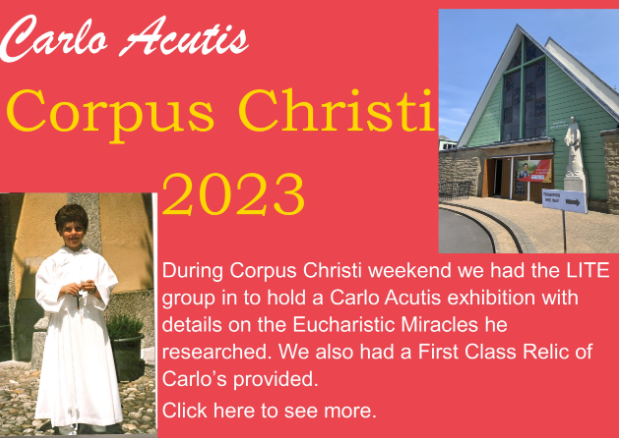
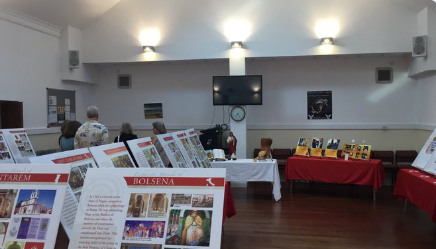
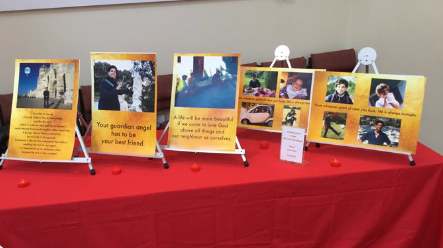
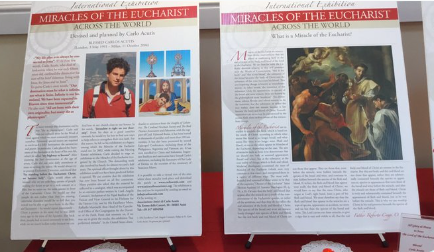
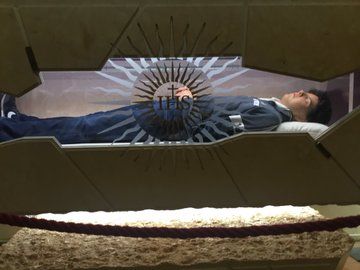
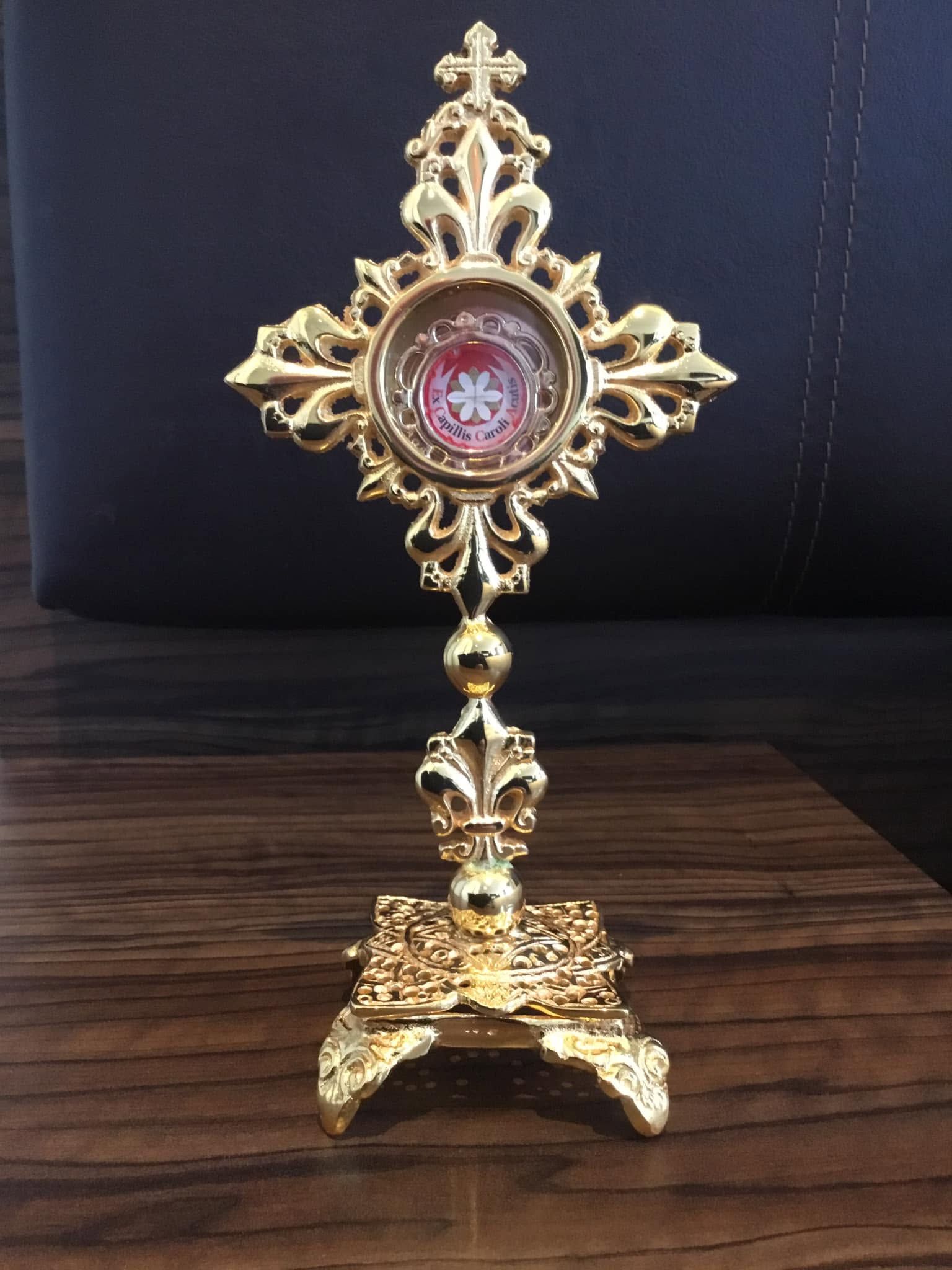
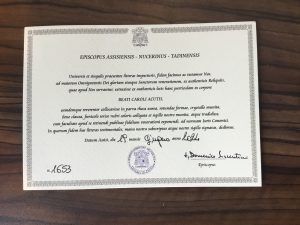
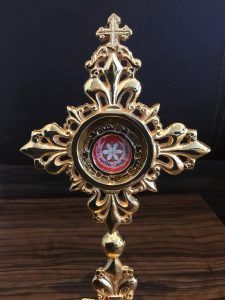
THE FIRST CLASS RELIC OF BLESSED CARLO ACUTIS (1991-2006) GRANTED TO THE PARISH OF ST. MARY, STAR OF THE SEA, LARGS BY THE MOST REVEREND DOMENICO SORRENTINO ARCHBISHOP-BISHOP OF ASSISI-NOCERA UMBRA-GUALDO TADINO
A news article published by Fr. Peter Magee on the 15th November edition of the Largs and Millport Weekly News
Homily to conclude the Triduum for Blessed Carlo The King sends servants to call those invited. These can be many: prophets, apostles. But also saints, including Bl. Carlo. Carlo had already gained a profound spiritual experience of the banquet: he did not just know it from the catechism, but very deeply. He saw crowds queuing up for pop concerts and football. “If they only realised …”, he would remark, what they are missing! The Eucharist is the foretaste of that wedding banquet which has been prepared for all peoples. The mountain of God with those rich juicy foods, fine strained wines and fresh and green pastures is right here. There is nothing we shall want. God is lavish, prodigal, excessive, abundant in what He gives. It is the Eucharist, Christ Himself who is our food, wine and pasture. He is the reviver of our drooping spirits and mortal bodies. He is our Eucharistic Reviver. The thing which can truly prevent us from being wined and dined by Christ is our indifference. The Gospel translation we have says that the invited guests were not interested. The original suggests more that the guests didn’t even hear the servants. It says that, not paying attention one went to his farm, etc.. Their attention was absorbed in other things such that it was as if no call ever reached them. God was no longer on their radar; he was just irrelevant, if there at all; he doesn’t enter into it. He is superfluous. But God won’t be mocked. The reaction He metes out in the parable is rather grim. By describing it as such, Jesus clearly wants to stir a response from his listeners. If the carrot doesn’t work, then the stick might! More deeply, the Lord is telling us that the stakes are, not just high, but eternal, when it comes to His invitation. Not our farms or businesses, but the eternal wedding banquet is what our lives are about in the end. The Eucharist is the principal means He gives us to keep alive His invitation, His call and our willingness to respond. He desires attentiveness to it, alertness! And what will that banquet look like in heaven? What will it entail? Is there really to be a kitchen large enough and tables long enough to prepare and consume an eternal eating and drinking session? As Jesus Himself is our food and drink in the Eucharist, so He Himself will be our food and drink in eternity. We eat and drink to stay alive, but when death is no more, we simply live with and from the life of God. He fills us in ways that surpass our understanding this side of death. Just as with our gaze we often feel fed by the beauty of someone or something we look upon, the beauty of Christ will fulfil and surpass all our hungers and thirsts, all our yearnings and needs, all our clamour for love, all our longing for peace and for joy. And He will feed us not as isolated individuals, but in the holy communion of all the redeemed. As we are fed by Him, we will feed one another with Him. He will be all in all and we will all be in Him and in all. There is nothing we shall want. Death, shame, tears, sin will be gone and forgotten. And without being too pious, I hope it is reasonable to say that, in these past few days, in our Triduum of celebrations around the Eucharist in Blessed Carlo’s company, we have experienced a little something of heaven. So many of you have opened up to the Lord: from the infants in the school with their spontaneous wonder and joy in welcoming Carlo and befriending him; from Margaret’s and Tommy’s witness before us to the power of the Eucharist in healing their woundedness; from those of you who have opened your hearts to the Lord in confession; from our sick who brought the blessing of their witness to the Cross among us; from those of you who have dared to hope for something new, something more in your spiritual lives by coming to the events of these days. All this openness, this willing vulnerability to the Lord, to Carlo and to one another is a foretaste of that transparency that is the hallmark of true communion. But we have also had rich food, wine and pastures in the richness of the input during the two holy hours, the Eucharistic Rosary and the Marian Via Crucis. No two wines taste absolutely the same, no two juicy roasts are of an identical flavour. The variety and the quality of what the Lord has dispensed through our friends in these days have been deeply nourishing. And Father Darren’s spiritual and pastoral leadership has brought the crook and the staff of the Good Shepherd to bear on our souls. He has sounded the bugle, and the cry of it has been unmistakeable in its clarity, its encouragement and its inspiration. His care and blessing for the individual sheep and lambs has been a particularly moving sign of the Lamb of God among us. My final thought has to go to Blessed Carlo. In a Church which has today often become so complicated and polarized, so driven by opinion and partisanship, the Lord has raised Carlo up like a flame of fire, almost like Elijah. Elijah pointed to the essential, to God, away from idols and self-concern. Carlo, in his adolescent, boyish directness, freshness and vitality is a prophet of the same ilk. Non io, ma Dio; not I, but God; happiness is looking upward, sadness looking downward; my life programme is to remain close to Jesus. He calls us back to the essential, to the bigger picture, to the transient nature of our mortal life. And he focuses all of this on the Eucharist as the highway to heaven. We could perhaps even say, the Eucharist as the true synodal highway to heaven. He knows he is only a slip-road onto that highway, as are all of the saints of the Church. And the Lord has given him to the Church of our time to direct us away from the winding and aimless roads of life which often lead nowhere. It’s not for nothing that devotion to him has spread like wildfire across the worldwide Church and that he appeals to people of all ages, cultures and conditions. Carlo, thank you for finding your way here, to us. Help us follow your highway to Jesus and to sit some day with you and all the others you are leading to him at the heavenly banquet of the beauty of the living God.